2014 Tomatoes Part One

If I were ever told that I had to choose only one plant to grow in my garden, I would choose tomatoes. And if there is any plant that I have a weakness for when it comes to new-to-me varieties, it is tomatoes (although peppers are now at a close second place). In the dead of winter when all I can do is sit wrapped in a wool blanket staring endlessly at my snow covered yard in a deep depression (I’m exaggerating a bit), I turn to the seed catalogs and websites and try to find ways of justifying tomato seed purchases. I know I don’t need any more seeds. I have more seeds than I could ever really grow in this space. But still, the excitement of trying a new variety outweighs rationality and I end up buying more seeds.

I remember sitting down at my kitchen table this last winter and laying out all the tomato seed packets. I currently have around 30 varieties, which by some hardcore tomato-loving gardeners is peanuts in comparison to their stashes. But for me, that’s overkill. Is it going to stop me from buying more seeds this next winter? Probably not. Regardless, I sat at my kitchen table in front of the seeds and realized I was going to need to make some hard decisions. Either, I cut back on the amount of non-tomato things that I grow in order to have more tomato growing space or I cut back on the tomatoes. I went with the latter. I decided to pull out all of the determinate varieties. In other words, varieties that are pretty compact, stop growing at a certain point, and that will ripen pretty much all of their fruit around the same time. Determinate tomatoes are excellent candidates for growing in pots because of their size restrictions and the fact that they rarely need staking. I have a lot of pots and they are easy to kind of stick wherever, so I started one plant of each of my determinate varieties. Easy. Same with the tumbling and dwarf varieties – they are even more compact and I’ve gotten away with planting multiples in the same pot or even sticking some tumbling into hanging baskets with other plants. Easy. Then came the indeterminate varieties – those which require staking and often grow very tall and unruly. They can even benefit from multiple prunings throughout the season. Indeterminate tomatoes can be planted in large pots, but in my experience it is easier to plant them in the ground or a raised bed because of how big they can (and will) grow. So when it came to my indeterminate hoard, I had to make some decisions. I based my choices on a few factors: I wanted to plant each of the brand new varieties I’d purchased and I wanted to plant varieties that I grown before and had good success with. If there was something that I’d successfully grown from seed in the past but it hadn’t produced well or that had something-to-be-desired taste results, it did not make the cut. I also wanted to ensure that I was planting one color of each tomato that I had (I am a sucker for colorful tomatoes!). I started 26 tomato plants indoors (some were multiples of the tumbling and dwarf varieties I mentioned above), but I did lose a few plants to squirrels in the early spring. So altogether I ended up with 16 plants (it was a really bad spring for squirrels).

So that brings me to Part I of my tomato posts. The first three tomatoes that I will be featuring are all indeterminate cherry varieties: Pink Bumble Bee, Green Grape and Black Cherry.

IMG_3689

Left to right: Pink Bumble Bee, Black Cherry, Green Grape

IMG_3674

Black Cherry

This was my fourth year growing this variety. I would be surprised if there was a year I did not grow Black Cherry – I have always had good results with this variety and Black Cherry is always a vigorous producer and the first of my indeterminate varieties to ripen. The tomatoes themselves are a darkish red/purple, transforming into a darker shade around the stem. I would describe the taste and texture as almost the perfect cherry. The flavor is a mild sweetness with very little acidity. I don’t think I need to say it, but I will grow this again – still a winner.
IMG_3677

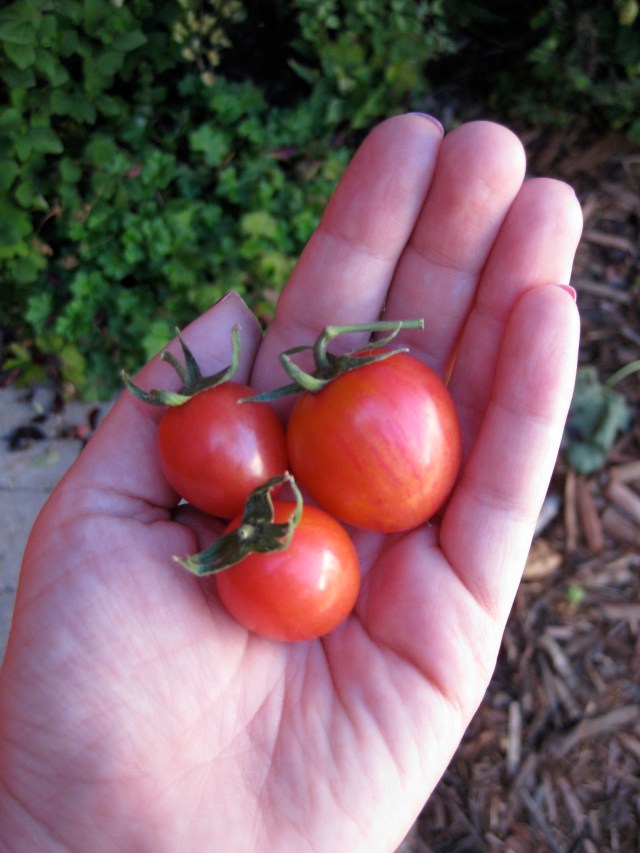
Pink Bumble Bee

This is a new-to-me variety this year. I chose this variety because I didn’t have a pink tomato and I also love striped varieties. The plant wasn’t a prolific producer (it wasn’t terrible, just not good), but the plant did remain healthy throughout the whole growing season. The striping is a bit hard to notice unless you really look at it and was most evident in the larger tomatoes – it is more of a reddish/pink with orange striping, although distinguishable from Tigerella, which is a different red/orange striped tomato that I have grown in the past. Although none of the tomatoes had an opportunity to ripen on the vines, they were one of the earlier tomatoes to ripen indoors. The taste was good – sweet but with a slight acidity. The texture was okay – not unpleasant but not nearly as nice as Black Cherry. As far as a pink tomato goes, it wasn’t really very pink so next year I might try another true pink variety. I’m a bit torn if I’ll grow this variety again – it wasn’t bad, but it wasn’t amazing.

IMG_3683

Green Grape

Another new-to-me variety this year. I have only grown one other green tomato variety and I really love it (Green Zebra – but I recently learned this variety was bred by the same fellow who bred the Green Zebra). The tomatoes ripen to a bright, almost neon yellow color with some bright green shading around the stem and you’ll know they are ready when the fruit has a little give when lightly squeezed. The first year I grew a green tomato variety I was very confused as to ripening time, but now I can usually tell just looking at it. This plant produced about as well as the Pink Bumble Bee but did stay healthy throughout the season. Similar to the Pink Bumble Bee, these did not have an opportunity to ripen on the vines but they did ripen inside quickly. I would describe the taste as mild, not very acidic, and with a simple sweetness. The texture was similar to the pleasant texture of Black Cherry. I really liked this tomato and I will definitely grow it again.

That brings my first tomato post to a wrap. I would love to hear about some of the tomatoes that you grow – whether it was a new variety or one that you’ve grown year after year. Let’s talk tomatoes!

Green Grape and Pink Bumble Bee seeds from Baker Creek Heirloom Seeds, Black Cherry seeds from Urban Harvest (although unavailable at this time, but available from Baker Creek Heirloom Seeds here).

The Garden is Dying

After last week’s summer winter storm, the garden took a bit of a hit. The damage wasn’t totally apparent until this last weekend when the snow had melted away and the sun had come out. There was a leftover patch of snow in front of my greenhouse this morning, reminding me that it’ll be back soon “Don’t get too comfortable!”.

The nights are supposed to be warmer which means I brought the poor potted tomatoes out from the greenhouse again – they’d been shoved on the floor where they were getting no direct sunlight, but at least they weren’t frozen. Maybe they’ll have a chance of ripening outdoors unlike all the other tomatoes that were harvested green a little over a week ago (some are very slowly ripening in the house).

But as for the rest of the garden, it is a mixed bag. We cleaned out three beds completely on the weekend – the raised bed that had corn, squash, beans and a couple of tomato plants, the galvanized steel livestock tank that had the indeterminate tomatoes, and the little in-ground bed that I had planted lettuces and marigolds. A few pots were cleaned out that contained the dead corpses of squash and some annual flowers like dahlia, morning glory, coreopsis, and nasturtium. I could have just left the dead plants in place, but frankly it was depressing.

IMG_3639

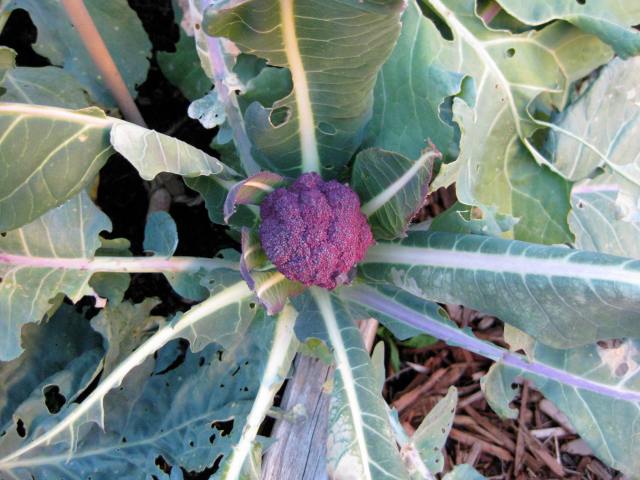
The good news is that there were a lot of troopers that did survive and will continue on until real winter hits, such as kale, beets, carrots, some herbs and the broccoli and cauliflower I was supposed to pull out but got too lazy. That’s right – the caterpillar damaged crop is still in place and actually doing pretty well. I haven’t seen another caterpillar since I destroyed the population back in August. And wouldn’t you know it, there are actually heads growing! I guess laziness pays off sometimes.

IMG_3644

The rest of the damage was a result of the weight of the snow. Quite a few of my perennials are nearly flat on the ground and won’t bounce back this year. My columnar aspen trees were not looking so columnar, so we used Velcro ties to try to get the branches back in place.

IMG_3637

Sadly the season is coming to an end and much earlier than I would like. The rest of September will be spent slowly harvesting the remaining crops, tending the greenhouse, and cleaning up the yard as plants expire. Since we are living out of a mini-fridge for now, I will probably spend a day in the near future canning beets.

I’ve already noticed that I’m spending a lot more time indoors and my trips to the garden are a lot more brief – the weeds have slowed down and I haven’t had to do much watering besides a can here and there to the greenhouse. As for outdoor projects, those are pretty much done for the year – I do still have the bottom side of my wheelbarrow to paint, but that is pretty much it. And the indoor projects are beginning again – knitting (time to start holiday gifts), updating my Etsy shop, doing a few minor updates around the house, cleaning the basement (thank you community association for hosting the annual free garbage day!), and pumping myself up to finish the powder room we renovated back in May. Let’s hope I have a few more weeks to enjoy the garden before I really settle myself in for the winter.

Pasilla Bajio Pepper

I had thought that in September I would be writing about and posting pictures of my green and lush garden winding down. But I was wrong. Instead, I’m talking about snow and freezing temperatures. Calgary was hit with a winter storm in the summer. It sounds ridiculous saying it, but snow is not unheard of at this time of year in Alberta, but a storm like this is fairly uncommon. The snow started falling in parts of the city on Monday morning but didn’t hit my area until early Monday afternoon. And it wasn’t bad – there were a few moans around the office about snowflakes but nothing was sticking. Then Monday night things started to stick. See my last post here. On Tuesday morning there was a bit of snow on the ground, but it wasn’t piling up on the roads or sidewalks. But it didn’t stop and by Wednesday morning, it was wet and heavy and still coming down. On my drive to work, I saw large mature trees splitting down the middle and limbs falling off from the weight of the snow and landing on the sidewalks and streets. Several street lights were out and many people were without power and/or water. We were fortunate that we only lost power for a couple of brief periods at home and we don’t have any mature leafy trees on or near our property (there are some old spruce trees on the street but those were not affected). Apparently the total snowfall tally in the city over the last few days was 35cm. It was the perfect weather to start knitting again and we did pull out the wool blankets which I love so so much. And apparently the weather is supposed to go back to normal September weather starting this weekend and early next week, so I’ll be able to not complain about snow for hopefully a few weeks.

IMG_3618
The aftermath in my garden, September 11, 2014 – snow has already fallen from my neighbor’s tree and melted off the shed roof and fence

And now to pretend that the snow didn’t happen and I’m happily harvesting vegetables from the garden.

I don’t remember what the deciding factors of purchasing pepper seeds were for me a few years ago (I’ve said it before – goldfish brain). Now that I have a few varieties of peppers under my belt I know it will be heat. But I’m not so convinced that this was a factor before. Looking back on my old stash of seeds, it seems the hottest seeds I’d purchased were jalapeno – weaklings in the hot pepper world. I’m going to assume that I chose the pasilla bajio based on the look of it on the package because I certainly didn’t buy it for the heat. The pasilla bajio is a really beautiful pepper – about 6 or so inches long and very dark green/slightly brown. I would be interested in drying some of these because they are supposed to be a lovely dark brown when dried and apparently make a really tasty powder, which is typically used for mole sauce.

IMG_3534

And it was one of the earlier peppers to appear in my greenhouse, which is a plus in my books. I started all of my pepper plants inside the house in February. I’m actually thinking I will start them earlier this coming year. They seemed to do really well under the lights indoors and did not grow big or leggy like a lot of other plants do when started indoors. The only reason for starting them earlier than February would be to get peppers harvested sooner. Some of my peppers were ready in early August, but most have been ripening late August and into September. And I even have a feeling that some varieties may even hold out until later, like my habanero.

The taste was very mild and flavorful with a hint of smokiness. I would actually argue that I didn’t find there to be any heat at all and that makes sense since this pepper is rated 1,000 – 2,000 on the scoville scale. That doesn’t mean it wasn’t good though – you just need to know going in that it isn’t a pepper you grow for heat. Since I only had 3 peppers, I made spiced chicken and pepper rajas, recipe from Bon Appetit. It was good, but next time I would actually add in a little hot pepper for some heat and serve it with some sour cream and shredded cheese (basically just a fajita without the soft tortilla). The recipe calls for pablano peppers but they are on the same level heat-wise as the pasillo bajio so I didn’t think the recipe police would mind too much.

Because I would like to experiment with making my own powdered spices, I will grow this pepper again. Plus, it is just so pretty.

Seeds purchased from Botanical Interests.


The September 2014 Garden

I have tried to find a way to start this post that wasn’t “Oh for God’s sake, it’s snowing”. But I can’t. It’s September 8th and it’s snowing. What the hell.

IMG_3606
Those little white specks – snow. My neighbor’s sunflowers look so lovely! And then an hour later…

image(1)

Let’s start this story about a week ago. I knew that the nights were starting to cool down a lot so I kept my eye on the weather forecast for frost warnings. And by “kept my eye on”, I mean checked obsessively every five minutes. I’m ashamed to admit that I learned the hard lesson last year on screwing around with frost warnings (yes, I am human, I make mistakes) – actually, not frost warnings because there wasn’t actually a frost warning. I saw the temperature was going to be borderline and I didn’t do anything. I should have gone out and covered things, but I didn’t. Stupid. So this year, not wanting all of my months-long efforts to go to waste, I watched the forecast carefully. On Wednesday night I checked the forecast a million times before bed and saw that it was only supposed to dip down to about 7 degrees celsius. Safe. Thursday morning I woke up, got ready for work, stepped outside my front door and it was COLD. I quickly touched the foliage of the closest plant. Wet (it had rained the night before) and cold, but not frosty. I scanned the rest of the front yard and it appeared alright. I got into my car and the windshield was COVERED IN ICE. Oh god. What about the tomatoes in the back yard?! What if they are covered in frost and ice? Were they dead?!

The tomatoes were fine. Everything else was fine too. Calm down woman.

Later that day, I got an email from the coordinator at our community garden saying the garden had been vandalized the night previous. Oh great, fantastic. As soon as I got home, I ventured across the street to survey the damage. Our plot was fine. I guess no one wants a bunch of crappy kale and beets. Our plot neighbor lost some squash though – I saw the evidence smashed against the nearby building wall. And some other people lost a few things as well, but gardeners have a pretty thick skin and are used to a bit of disappointment. My husband and I went ahead and harvested the last of the beans and beets. The bean harvest was great this summer, producing about 9 litres of beans from about 12 square feet of space, but the beet harvest was pathetic. Most beets were about golf ball sized, so we only really got about 4 litres of beets from that space. Luckily I’d also planted beets at home which turned out much nicer and significantly larger. We left the kale and leeks in place for now – we have more kale than we know what to do with, so if someone wants to help themselves I will not be sad. Go ahead hooligans, steal my kale.

IMG_23911

And then our fridge decided to start dying. It hasn’t completely died, but it is happening soon. I’ve been feeling like it has been on its way out for awhile now but it has started randomly spilling out a lot of water ON MY NEW FLOOR. This isn’t the happiest news, especially at harvest time when one requires a fridge to store vegetables. We could get someone in to look at and repair the fridge, but frankly it is old and an energy suck and we’d just prefer to bite the bullet and purchase a new fridge. Now here’s the catch: Megan is extremely picky about everything that she buys, especially when it has a significant price tag attached. She does not want to go out and buy the cheapest replacement fridge and then have to look at it and secretly resent it for the next 20 years. Megan wants a really pretty and good quality fridge. Therefore we have come to the decision to purchase a mini-fridge as a placeholder until we can save up some money over the next couple of months and buy something really nice.  The cost of the mini fridge would be around the same as getting a professional to come in just to look at the dying fridge, plus we have a friend who is in the market for a mini-fridge and has offered to buy the mini-fridge from us when we are done with it. My brother is excited because he basically gets all the food that will not fit into the mini-fridge. Everyone wins. Except the old fridge – you lose. Oh and the microwave died too but we’re not too sad about that – we are going to try going microwave-less. If the oven dies I’m going to absolutely lose it.

Okay back to the tomatoes. After my little scare on Thursday morning and after the drama of the community garden, I went home and covered my tomatoes for the night. I wrapped them up in any spare sheets and fleece blankets that I could round up, then secured the covers with clothespins. It didn’t freeze that night, but at least I had peace of mind. Things started to warm up on Friday so the chance of frost was lifted and the forecast for the weekend was decent. But there was talk of snow early in the week. Seriously?! On Saturday I went out and picked all of the green indeterminate tomatoes. I didn’t really want to so early – I thought I had a few more weeks to allow ripening on the vines. And really, although I live in Alberta and know in the back of my mind that we could get snow any time, I still like to believe that we shouldn’t get snow until at least October. Sigh.

IMG_3611

Now on to the rest of September. This afternoon I harvested the corn (we have corn!), one last zucchini, two green pumpkins and a handful of cherry tomatoes. And I brought some of the herb pots indoors just in case. I also had 3 pots of cherry tomatoes growing on my deck so I moved those pots into the greenhouse where it is a bit warmer.

IMG_3613

Once the weather warms up again and it stops raining/snowing, we’ll clean up the yard a bit and harvest some of the other things like the remaining beets and carrots. The composts will be turned, rain barrels emptied, and raised beds and pots cleaned out and stored for winter. I can’t believe we’re at this time of year already – it honestly seems like yesterday that I was rushing around in a panic to get everything planted and now everything is covered in a layer of white snow.


Filius Blue Hot Pepper

I used to be a picky eater. I used to hate peppers. I used to carefully extract peppers, mushrooms and onions from dishes and throw them in the garbage. I feel ashamed to admit this.

I don’t know exactly when I started eating the things I used to hate. I don’t know exactly when I started loving the things I used to hate eating. But it happened. I know it definitely happened some time in my early adult life. I don’t know how it happened – did I all of a sudden just shove these things into my mouth and declare them amazing? Or did it happen gradually over time? I have no idea. I have goldfish brain.

I know that hot peppers were a more recent addition to my life and I think it was inspired a lot by my love of East Indian and Mexican food, as well as my somewhat recent introduction to Sriracha and other hot sauces (I don’t mean recent as in yesterday, but like the last 5 or so years). Hot peppers intrigue me and I want to grow and eat them all.

IMG_3391

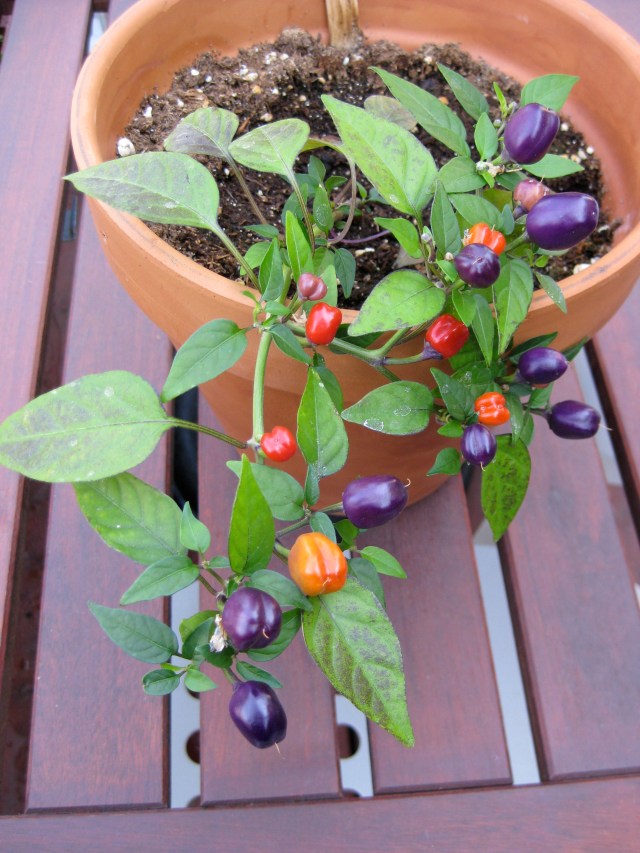
I’ve mentioned before that I’m a bit of a weakling when it comes to heat. I can handle a bit, but nothing extreme. I like to burn my face off just a little bit, mainly in the privacy of my own home. The filius blue is pretty mild when it comes to hot peppers. It has a little bit of heat, but not much. Dare I say, not enough heat for me. I had some pretty high expectations for it as it is rated the same heat level on the scoville scale (30,000 – 50,000) as the Chinese 5 Color that I wrote about last time. For me, this had about half of that amount of heat. Eating them whole raw (seeds and all) and in multiples was no problem.IMG_3548

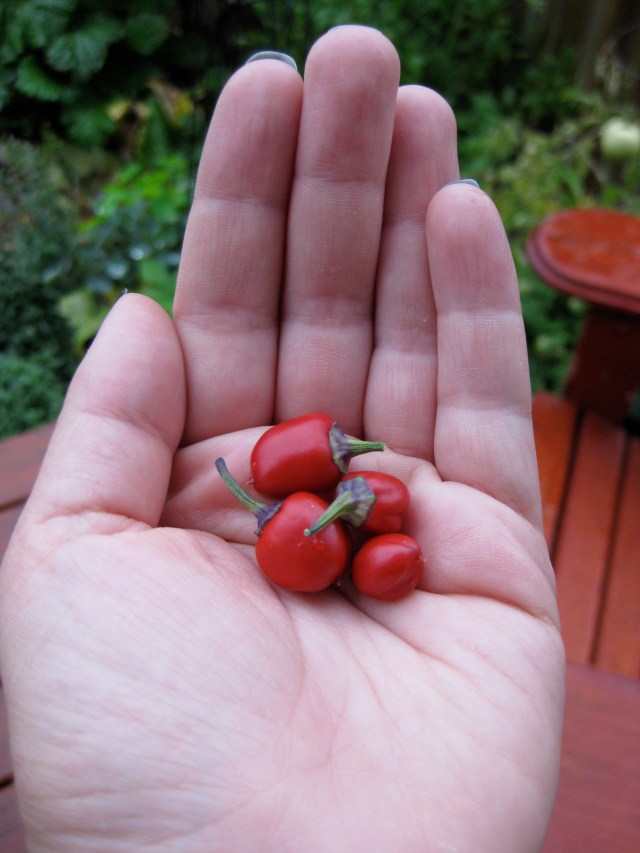
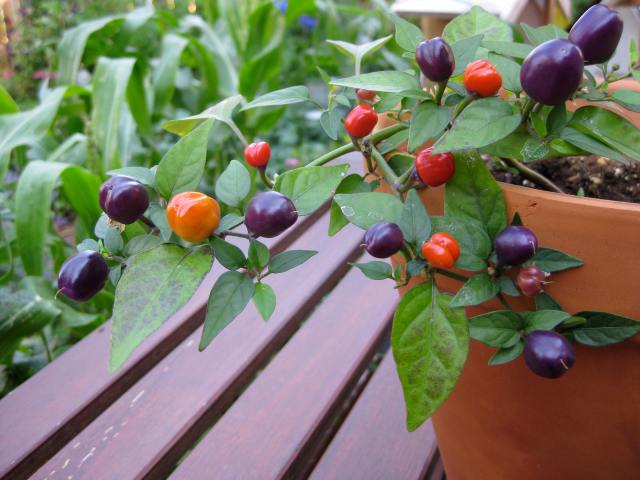
I think the best part of the filius blue is the plant itself. It is extremely compact, growing about 6 inches tall and about 8 inches wide in a terra cotta pot. The leaves are a lovely green with a purple tinge on the edges and purple veining. The flowers are white and purple. And the peppers themselves are very small, medium/dark purple and ripening to a bright red. Unlike the Chinese 5 Color, these peppers start out purple, turn a little orange and then directly ripen to red. And the peppers are abundant. I threw them into tacos (it should be mentioned that they lost any traces of heat after being cooked) and into fresh salsa.

IMG_3394

I grew two of these plants this year but next year I will limit it to one plant – greenhouse space is valuable real estate! I liked the mild heat of the fresh peppers, but I wasn’t entirely blown away. If you’re looking for a really compact mild hot pepper that easily grows in a pot and looks beautiful, this is the one for you. If you want something really unpleasant and face burn-y, stayed tuned for next year’s harvest.

 Filius Blue Pepper seeds from Baker Creek Heirloom Seeds.