Things I Wish I’d Known When I Started Gardening

I’ve been gardening on my own for about 12 years now (I also dabbled as a kid, begrudgingly helping my Mom in her garden, but does that count?). Anyway, my first year or two of gardening on my own was pretty easy – I lived in a rental that already had a huge area ready to go for planting whatever I wanted, I just had to pull a few million weeds and plant some seeds. Another bonus about that garden was that a previous dweller of the home had left behind a bunch of big plastic planters that I filled with soil from the garden (I’ll touch on this more below), so I was pretty lucky since I had little to no disposable income at that point in my life. And although those first few years were very easy for me, I didn’t know a lot about gardening. Then we moved to our current residence and it was a whole different story – a dog-stained sod and concrete block nightmare. I wish I could say we had a clean slate, but we really didn’t. We had what years of previous owners had left behind. Sometimes I’m envious of people who move in to new builds with total clean slates. Anyway, now that I’ve had a few years of gardening experience under my belt, I thought I would share a few tips that may be useful to the just starting out gardener, or that may even serve as a reminder to the experienced gardener – these are all definitely things that I learned along the way from that first garden to our current garden.

1. There is a lot of information out there and everyone has advice for you. Start off by checking out a few gardening blogs and acquiring a book. My favorite gardening blog is You Grow Girl (Gayla Trail has a ton of resources for the new gardener) – also check out her first book with the same name. The first gardening books I owned were by Lois Hole who was a Alberta specific gardener (these are still the ones I refer to the most), so my recommendation is to look for a book that is specific to your climate (you can also search online for gardening blogs in your area). While I do value the advice from experienced gardeners, it can be a bit overwhelming to the new gardener. Accept and be thankful for the advice and then take it with a grain of salt. You really won’t know what it going to work for you unless you experiment.

2. Your soil is the most important thing. If you’re going to spend any money in your garden, spend it building up your soil. Spending money on dirt may seem pretty silly, but trust me, it makes all the difference. A good combination of healthy garden soil, manure and compost will be your best bet – it really depends on what you’re starting out with. My soil has quite a bit of clay naturally, so ensuring that I’m adding in materials that will provide the soil with sufficient drainage was important. The best thing to do if you’re starting fresh is to purchase a truck load of dirt or get one of those really, really big bags delivered – it will be much cheaper than buying individual bags from a garden center (I made this mistake as a new gardener). If you don’t think you’ll use a big load of dirt, you actually probably will – worst case you can spread a thin layer on your lawn to provide a boost of fresh nutrients.

3. Speaking of soil, don’t do what I did and just shovel dirt from your garden in to pots – this soil is probably way to heavy for your pots and the drainage will be terrible, causing your roots to rot. Your potted plants will also be competing with weeds for space and nutrients. If you only have a few pots to fill, you can absolutely get away with buying the individual bags of soil from the garden center.

4. Another note on potting soil – you do not need to replace the soil in your pots annually – I rarely do. The only exception for me is the smaller pots – I always replace the soil in those because most of the plants grown in them have become root bound by the end of the season, so I just throw the plant and the dirt in the compost pile. But with your bigger planters, it is totally okay to just refresh the old soil by removing the top 6 inches of old soil and replacing it with a mixture of fresh soil and compost. I do follow a couple of rules when it comes to replacing pot soil – the first I mentioned above (small pots), but the other is that I ensure not to plant the same types of plants in my pots the next couple of years in order to prevent the spread of disease. So for example, tomatoes will never be planted in the same soil twice. Healthy soil = healthy plants. The third exception would be that if any diseased or sickly plants were grown the year prior, that soil would go right in my trash bin and be replaced with fresh soil (always make sure those pots have had a good scrub as well before getting fresh soil).

5. You don’t need many tools. You need a good hose with a good nozzle, a shovel with a sharp edge, some gloves (if you choose, I know lots of gloveless gardeners), a sturdy bucket, and a good trowel (my favorite is the hori hori because it does double duty as a trowel/knife/murder weapon). I have lots of other tools like rakes, a hoe, a pitch fork, various hand tools, and so on, but I rarely use them.

6. Don’t get too ambitious on your first try. Start off with a tomato plant in a pot, some herbs, some lettuces, and a few other easy plants. And don’t be disappointed if you only get a handful of tomatoes or if everything dies. I still kill things and I still sometimes only get a handful of tomatoes – that’s just part of the game. Half the fun is learning about your climate and growing conditions, making mistakes, and thinking up ways to try again next time.

7. You don’t need to buy the biggest plant. The biggest plant will also be the most expensive. I almost always opt to buy the smaller version of a perennial because I know it will only be a year before it is the size of the large one – the key is patience. Also, if you know you’re going to have to fill a larger area, you can always purchase a couple of plants and wait until end of season sales where you can often get plants for next to nothing (about half of my garden is discount plants). Instant gratification is no fun when it comes to gardening – experience it fully and watch tiny plants grow in to unruly monsters!

8. Don’t overspend. This is easier said than done. You can garden on the cheap, trust me. The garden centre is great, but it is also really expensive. I can easily walk in intending to buy no more than a bag of dirt and walk out with $100 in plants. Connect with your local horticultural society and see when the next plant swap or plant sale is. Also, make friends with gardeners as most of them are more than happy to divide plants up for you. I also end up giving away quite a few tomato seedlings in the spring because I’ve been too ambitious with my seed starting. Keep your eye on your local Craiglist, Kijiji, or equivalent for free pots and plants. Also like I mentioned above, you only need a few tools to get you started and you’ll really want to initially put your money in to good soil.

9. Build things up over time. I am guilty for wanting everything in my garden now. But the truth is, if I went ahead and did everything at once, I would be in debt and I would probably have a bit of garden regret. Start with a few pots, then a raised bed, and then just keep building up on that each year. Don’t try to do everything in one season, you will probably not get much joy out of your garden and the whole thing will be a chore for you.

I think the common theme here is patience! Do things slowly and as you can afford to. Don’t get discouraged if things don’t happen for you right away. Keep trying and celebrate the successes, even if your Facebook friends don’t get as excited as you do about a truck load of manure. And just in case you thought my garden transformed over night, here is a before/after (it took 10 whole years to get it to where it is now – and I have a million things I’d still like to do with it!):
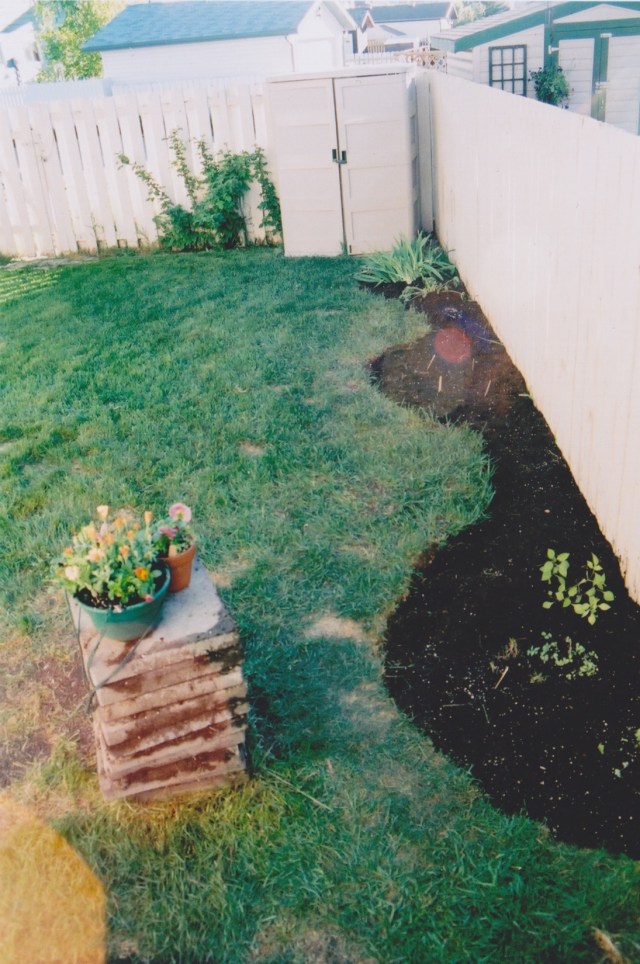
Garden Before

Before: This was the first year in our garden and we’d just pulled up those concrete blocks and dug the first bed.
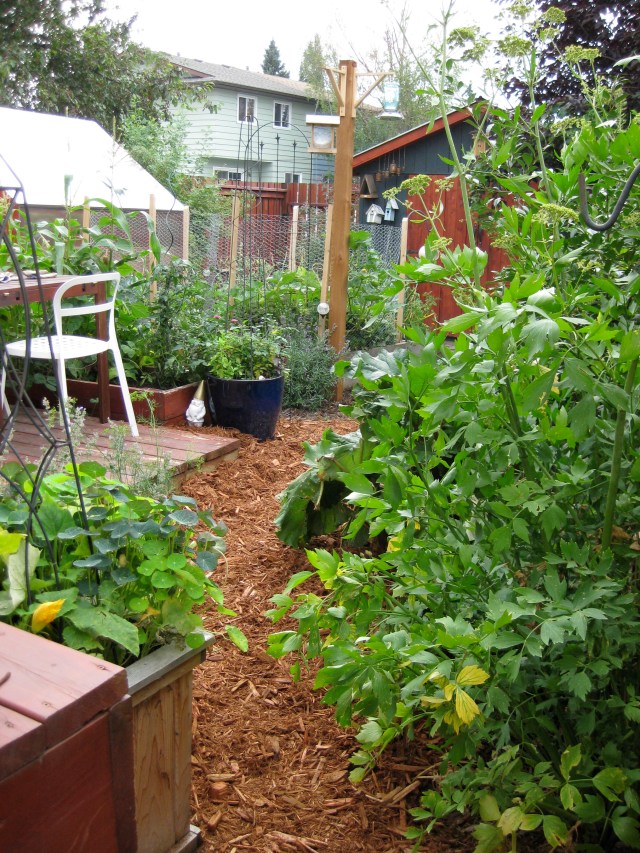
Garden After

After: No more grass, lots of raised beds and growing space, and new deck, fence, shed, and greenhouse. It took 10 years to get to here!

New gardeners: what are some of your biggest fears or challenges? Experienced gardeners: What tips do you have for the gardener just starting out?

Gardening Goals 2015

I’d actually started writing this post at the beginning of January, right after I’d talked about my overall 2015 goals. Then I sat on it and kept coming back to it, somehow unable to hit “publish”. I talked about how I had these huge plans to build more raised beds, build a pergola in the back yard, do a big overhaul of the front yard, etc. Then I realized what was keeping me from posting it – it was BS. I had all these big plans that I’ve had for years and somehow I thought I was going to be able to magically come up with A) the money to do them all and B) the time to do them all.

One of the difficult things about being a gardener is that sometimes you want it all now but you can’t. Being a gardener is a huge test of patience. I know that eventually my garden will be exactly what I want it to be, but I need to slow down. I need to do a little bit every year within my budget and time constraints. Sure, I could hire all the work out and pay for it with a credit card, but that would be stupid and irresponsible.

Anyway, how about I stop talking about what I can’t do and talk about what I can do this year! So, after I’d taken a realistic look at what can be accomplished in the garden this year, I came up with a few things that I think are reasonable.

1. Try new things. I always make a point to try growing at least one new thing each year. I’m not talking about varieties though – I’m growing a ridiculous amount of new tomatoes and peppers this year and I know they’ll probably do well because I have experience growing these things. I’m talking about plants that I’ve never grown before. This year I’ve decided on orach, shisho, cow peas, fava beans, and sorrel. I’ve heard that these are all fairly easy to grow so the real experiment will be to see how they do in my short season climate. Although I have attempted to grow watermelon before, it has not been successful. I thought I had given up last year, but I just impulse purchased some new watermelon seeds which are ideal for shorter climate growing season, so I’m going to give watermelons another chance in addition to all the news things I’m trying to grow.

2. Re-evaluate the deck space. Up until a few years ago, our back deck wasn’t utilized. Mostly because it wasn’t very safe, but also because it was tiny and lacked any privacy from the neighbors. When we decided to fix the deck up a bit, we wanted to expand it, but not make the yard look any smaller than it is. So we decided to keep the original deck as is (we did replace all of the top boards, front skirt, and also gave the frame a lot more support so it would last for a very long time), but added a ground level that was more than double the size of the top level. This way we wouldn’t need to get a building permit from the city and we wouldn’t need to add in any railings, keeping everything nice and open (although I think technically we are supposed to have railings on the top deck, but we’re lazy and just haven’t gotten to it yet). Anyway, the first year we had the deck I decided we should buy a larger patio table and chairs because I thought we’d be out there all the time and entertain frequently. But this hasn’t happened and I am not pleased with how we use that space – the patio furniture takes up way too much real estate, so I can’t even keep any planters on the deck. So my idea is to sell the current furniture and keep my eye out for a small metal bistro set. As well, I will use a good portion of the bottom deck for container gardening in pots. All those tomatoes need to go somewhere! And although this will cost a bit of money, the cost for a new bistro set and pots will be minimal.

IMG_3554
The original idea was to spray paint these white chairs a bright color, but I think a small colorful bistro set would be a better use of the space so I’ll sell the larger set we have now.

3. Continue removing sod in the front yard. The back yard became sod-free 2 years ago. We took most of that sod and made it in to a mountain, which last year we turned in to Compost Land. And we had big plans to remove all of the sod from the front yard, but just didn’t get to it. Anyway, we’ll continue on with that goal this season and hopefully be sod-free or else as close to sod-free as we can be. Removing sod by hand is time consuming and labor intensive. Some people will argue to differ, but we like to try and save as much of the soil as we can, eliminating waste – so every time we pull out a chunk of sod, we like to hit it and shake it until most of the soil is back where it came from. Anyway, we’ve been slowly working on the front yard and would like for it eventually to be cedar mulch, perennials, and raised vegetable beds. I’m still unsure how the layout will work, but I won’t worry about it much until the sod is completely removed.

4. Utilize the growing space in the back alley. Now that we have the new giant raised bed in the alley, there is an opportunity to use is as a growing space for vegetables. It is going to be an experiment in trust (it is an alley, so sometimes people and animals help themselves to things), as well as an experiment with new conditions. The area is completely full sun and it gets hot in the late afternoon (I got my worst sunburn ever there last year when we built Compost Land). I want to try growing my pumpkins there, but I need to build some chicken wire protectors for the seedlings to prevent squirrels from messing with them, and I might need to put up some sort of climbing support system. We park back there, so I think the pumpkins would have a better chance of not getting damaged if they grow up rather than out. In addition to the large raised bed, I also have a smaller one against the back of my shed in the alley. I currently have raspberry bushes planted in there, which give us a few hand fulls of berries each year, but I think I may want to plant a few more bushes in that space, or else look at something additional I can plant there to fill in a few empty spaces.

I think I’ll leave it at that. Of course I have a million other projects that I’d love to accomplish in the garden, but I’m going to pull back the reins and leave those for another year. I feel good about focusing on removing sod, making the deck space more functional, growing a few new things, and experimenting in a new growing space. Do you have any big or small goals in your garden this year?

Happy Ten Years, House!

This week marks 10 years in our home. I remember the first time walking in the front door and breathing a sigh of relief. We’d been looking at homes for a couple of days and while we’d seen things we liked, I wasn’t crazy about any of them. I knew this was the house for us when I walked in and breathed that sigh of relief – it felt just like the home I’d had in my mind. I guess our realtor must have seen the look on my face as well and commented that it was the house. It had a good sized kitchen and a yard big enough for a garden. The two things I loved most about the house then are the two things I still love the most about our house, ten years later.

IMG_1406

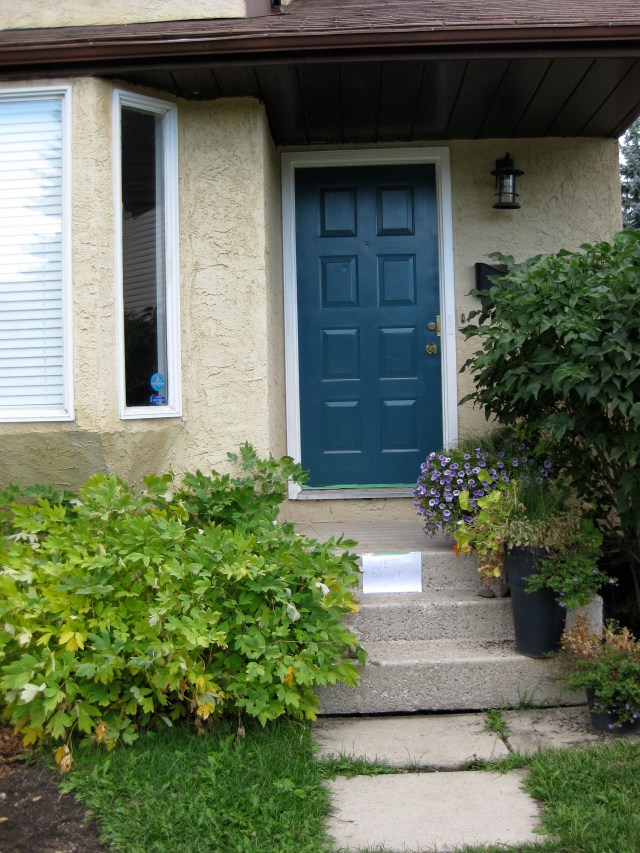
Apparently this is the best picture of the front of the house I have – right after I’d painted the front door (you can still see the green painter’s tape and “west paint” sign on the steps) – oh well!

Our house has seen a bit of a transformation while we’ve lived there. The yard went from a neglected and very dull rectangle of overgrown raspberry bushes, trees planted too close to the house, and dog stained lawn, to our productive little retreat. The inside of the house has seen quite a few changes – mostly cosmetic, but also many repairs and functionality adjustments. Of course we will continue to make it in to our dream home over time (I wish this was one of those blogs that showed miraculous renovations that happen pretty much overnight, but unfortunately time and money stand in the way of that, sorry).

I’ve been thinking about the house a lot lately – it was built in 1978, which isn’t that old, but I don’t know too much about it besides that. There is very little evidence of what the house originally looked like as it has seen a few renovations over the years. The outside is more than likely exactly the same (besides the yard of course). I wish I could see pictures of what the house looked like when it was brand new, but I think even if something like that existed, it would be very difficult to obtain. I’d also love to know about the people and families that lived in our home before it came to us – we know a little bit about the previous owner we bought the house from, but not too much. It’s not that any of these things would be of benefit, it is out of pure curiosity.

I love our little house and am looking forward to spending the next 10 years in it!

The Garden January 2015

As you can see there is not too much going on in the garden. Everything is covered in a thick blanket of snow and ice. It’s pretty difficult right now to picture a lush, thriving garden, but I’ve been trying not to dwell on it too much – it can be pretty easy to get depressed this time of year. I’ve been keeping myself busy with ordering new seeds (the first of the new seeds arrived in the mail this week!), taking inventory of my seed collection, and making list and schedules of things I want to grow this year. I think we’re at 24 tomato varieties and 23 pepper varieties (!!!). And even though my garden is still a few months away from thaw, the weather has been unseasonably warm this week so I’m feeling somewhat optimistic!

2015/01/img_0282.jpg

Have you been doing any garden planning yet?

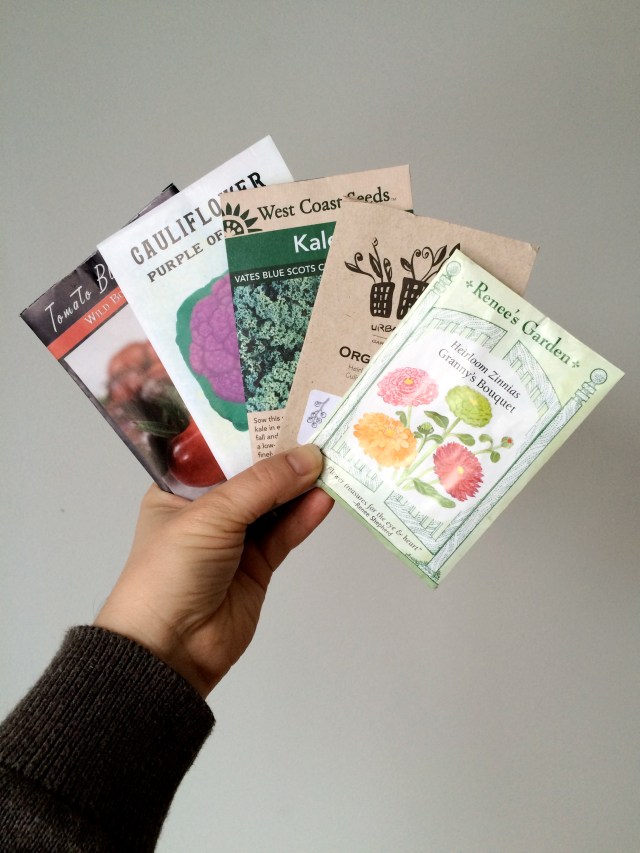
The Big Seed List 2015

It’s the most wonderful time of the year! Words cannot express how excited I get over picking out new seeds. I am also thrilled to be writing about my garden again. I know it is still months away from thawing out, but this is the time of year I can actually imagine it existing again – I haven’t seen anything resembling a garden in my yard since some time in early November. I guess November wasn’t that long ago, but it feels like its been a year, especially when the really cold weather hit.

IMG_3066

Before I get too deep into things here, I must say that I do not need any new seeds. I have more seeds in my collection than I could probably ever plant (especially tomatoes), but that isn’t going to stop me from acquiring more. I always plant the tried and true, but I also love to experiment and grow new things – it is just part of what keeps me coming back, even if the experiments fail. I’m sure lots of people can relate to this. And because I need to further justify my purchasing more seeds, I usually end up giving away seeds to friends and family. Still don’t need new seeds, whatever.

I usually casually start the process of selecting seeds for the next growing season at the end of the last gardening season – making notes of things that worked well, seeds that may need to be replenished, or things that I’d love to try. Thankfully I was ahead of the ball last year because I took the initiative to go through my three binders of seeds (yes, three), and toss any seeds that I was never going to plant again or that may not be viable anymore (this means old seed or seed that may not be very old, but that is past its prime – we’ll talk about seed viability on another day). I was hoping that by sorting through my seeds, I would miraculously be left with a reasonable amount of varieties, thereby making it easier for me to select what I would be planting. Hahaha! That didn’t happen. I still have like 30 varieties of tomatoes and no where near the room to grow them. Is that stopping me from buying more tomato seeds? No. I’m a gardener, I want to grow all of the everything.

Anyway, this year was actually pretty easy when it came to selecting which types of vegetables I wanted to grow. I knew that I didn’t want to grow eggplant because I failed hard at it the last four seasons (last year was the biggest success year with one eggplant being about the side of a halloween-sized candy bar – if you can call that success?). I might come back to eggplant another year, but thankfully we have a good local grower so I’ll just continue buying them from someone else and save myself the disappointment. Then there are the brassicas. Kale is in – I always seem to have good success with kale and it is something I can easily grow in the community allotment (no one wants to steal kale and it doesn’t mind being neglected), but anything else in that family is out. It’s not like I can’t grow it – I did have a little bit of success last year with cauliflower. But the caterpillars love to slither their tiny green bodies over the brassicas and munch holes through the leaves. Then lay their disgusting eggs all over it. And then I eat the eggs and caterpillars grow inside of my stomach (maybe). Anyway, no brassicas, besides kale.

Alright, now let’s talk about what I will be growing. The ultimate list will be at the bottom of this post, but I wanted to elaborate on some of the selections so I’ll go in to more detail now.

Tomatoes: My favorite things to grow are tomatoes. Growing them in my climate is a bit of a risk. I usually stick with the smaller varieties of tomatoes because I know I’ll have at least some success with them. The larger varieties are usually out for me, which does make it slightly easier to select varieties for growing (don’t get me wrong, there are like 1 million smaller varieties to choose from, but subtract that from the 2 million larger varieties and it does make a bit of a difference). So first I make cuts from the seeds I already own – if there is a variety that I just didn’t like the taste of last year, it gets thrown in the “NO” pile, same thing if it was just a crappy plant (blight, unhealthy plant, etc). Sorry rejects. Everything else goes in the “MAYBE” pile and then I divide those seeds into categories based on color. If there is only one variety per color category, that tomato gets the privilege of growing in my garden. If there are more than one variety per color category, I must make hard decisions. Do I grow all of those varieties? Sometimes yes, sometimes no. I usually have a really hard time with the green tomato varieties because those are my favorite taste-wise, so I more often than not, end up growing all of them. When it comes to selecting new varieties I always select varieties that I have not planted before – this year I am really into dwarf tomatoes (which is good because they are very small plants, hence dwarf variety). I’ve also selected a few varieties that I like the look of (a yellow/blue variety, yes please!). And then I end up cursing myself when it comes time to plant them in the garden because I’ve grown 30 tomato plants and comfortably have room for 20. Off to the garden centre to buy more pots!

Peppers: If you’ve been reading the blog since last growing season, you’ll know that I only really got into growing hot peppers about a year ago. I’d grown them a little before that, but my season is short and cold, so they are not exactly an ideal candidate for me. But last year was the first full growing season with my greenhouse, so my ability to successfully grow peppers increased significantly. Choosing pepper varieties was actually a lot easier than the tomatoes. I knew which ones I wanted to grow from the seed I already had and I had a better idea of what I was looking for in a hot pepper (I like the milder hot peppers and my husband like the really, really hot ones). I knew that I wanted a few sweet pepper varieties as well, so that was fairly simple. I also knew that I wanted to grow every type of habanero pepper I could get my hands on. I think growing hot peppers is my new thing.

Squash: This was sort of easy, sort of hard. Easy because I was and wasn’t restricted with space. I knew I wanted to grow a few of the larger vine pumpkins in my alley in the raised compost bed (formerly Sod Mountain) – space isn’t really a concern here, it is out of the way and not technically in my yard (the parking space and compost bins are on our property, but are not actually in the fenced in portion of our yard). It is risky growing things in this area because of pests of the animal and human variety, but I have been growing raspberries in the alley for several years and I haven’t gotten any horrible diseases yet, so whatever. The main thing will be actually remembering to water the plants back there (out of sight, out of mind?). When it comes to actual yard space, maybe I don’t have the most room for squash, so I try to select my varieties based on size. I have quite a few compact bush-type squash, so that works well for my raised beds or larger pots. I do grow a few of the larger varieties vertically so that also helps with the space issue. I have plans to build some raised beds in the front yard for growing vegetables, which will expand my options for growing space, but I don’t have an actual timeline on that project so for now I’m just planning for the space I have. The point is, I am going to start quite a few squash plants in the house and I may or may not have space for them.

Flowers: For a few years I actually believed that planting flowers was a waste of perfecting good vegetable growing space. Oh how wrong I was. Planting flowers that will attract beneficial insects is probably just as important as planting vegetables to ensure a thriving and healthy garden. And it is so easy. I’ve gotten in to the habit the last few years of sticking random marigolds in to my raised beds, but last year I did the same with zinnias (which are now my favorite). I don’t have a ton of flowers on my wishlist, but the few that I do have are ones that will provide a bit of extra color throughout the growing season, as well as attract the little bees and butterflies that I love seeing in my garden.

And lastly, I always try to plant something completely new-to-me each year, so this year I’ve chosen cow peas, fava beans, orach, mexican sour gherkins, sorrel, and shisho.

The Big Seed List 2015:

Tomatoes:
Blue Gold Berries (indeterminate)
Purple Bumble Bee (indeterminate)
Sunrise Bumble Bee (indeterminate)
Blue Beauty (indeterminate)
Golden Bison (determinate)
Andrina (dwarf)
Hahms Gelbe (dwarf)
Ditmarsher (determinate – hanging basket variety)
Lime Green Salad (dwarf)
Koralik (determinate)
Pearly Pink Orange (dwarf, hanging basket variety)
Yellow Pygmy (dwarf)

Peppers:
Hot:
Lemon Drop
Fish
Chocolate Habanero
Italian Pepperoncini
Purple Jalapeno
Tabasco
Pimiento De Padron
Trinidad Scorpion

Sweet:
Mini Chocolate Bell
Mini Yellow Bell
Tequilla Sunrise
Oda Pepper

Squash:
Crookneck Early Golden  (summer)
Marina Di Chioggia Pumpkin (winter)
Jarrahdale Pumpkin (winter)
Thai Kang Kob Pumpkin (winter)
White Acorn Squash (winter)
Zucchini-Lungo Bianco Squash (summer)
Patisson Panache Blanc Et Vert Scallop Squash (summer)
Patisson Strie Melange Squash (summer)
Lemon Squash (summer)

Other:
Scarlet Kale
Meraviglia Di Venezia Bean
Alaska Garden Pea
Blauwschokkers Pea
Holstein cowpea
Lady cowpea
Extra Precoce A Grano Violetto Fava Bean
Mexican Sour Gherkin Cucumber
Dragon’s Egg Cucumber
Orach
Shisho
Bloody Dock Red Sorrel

Flowers:
Queen Lime Red Zinnia
Royal Purple Zinnia
Morning Dew Pansy (edible)
Mary Helen Marigold

Okay now to go burn my seed catalogs before I start to add things on to my seed order.

Seed sources: Tatiana’s Tomatobase (Canada), Baker Creek Heirloom Seeds (USA), Heritage Harvest Seed (Canada), West Coast Seeds (Canada)