Pasilla Bajio Pepper

I had thought that in September I would be writing about and posting pictures of my green and lush garden winding down. But I was wrong. Instead, I’m talking about snow and freezing temperatures. Calgary was hit with a winter storm in the summer. It sounds ridiculous saying it, but snow is not unheard of at this time of year in Alberta, but a storm like this is fairly uncommon. The snow started falling in parts of the city on Monday morning but didn’t hit my area until early Monday afternoon. And it wasn’t bad – there were a few moans around the office about snowflakes but nothing was sticking. Then Monday night things started to stick. See my last post here. On Tuesday morning there was a bit of snow on the ground, but it wasn’t piling up on the roads or sidewalks. But it didn’t stop and by Wednesday morning, it was wet and heavy and still coming down. On my drive to work, I saw large mature trees splitting down the middle and limbs falling off from the weight of the snow and landing on the sidewalks and streets. Several street lights were out and many people were without power and/or water. We were fortunate that we only lost power for a couple of brief periods at home and we don’t have any mature leafy trees on or near our property (there are some old spruce trees on the street but those were not affected). Apparently the total snowfall tally in the city over the last few days was 35cm. It was the perfect weather to start knitting again and we did pull out the wool blankets which I love so so much. And apparently the weather is supposed to go back to normal September weather starting this weekend and early next week, so I’ll be able to not complain about snow for hopefully a few weeks.

IMG_3618
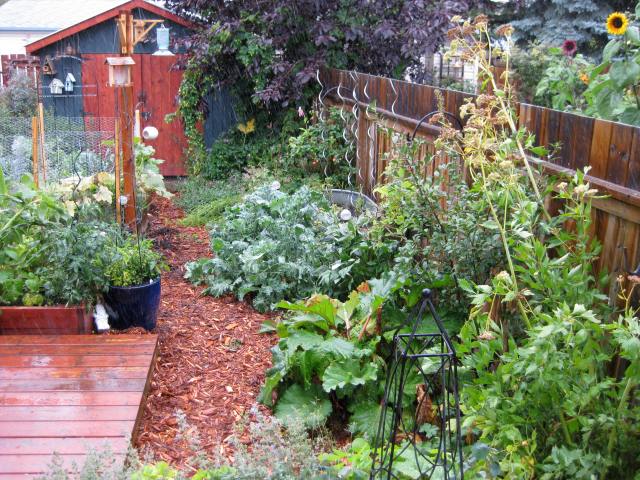
The aftermath in my garden, September 11, 2014 – snow has already fallen from my neighbor’s tree and melted off the shed roof and fence

And now to pretend that the snow didn’t happen and I’m happily harvesting vegetables from the garden.

I don’t remember what the deciding factors of purchasing pepper seeds were for me a few years ago (I’ve said it before – goldfish brain). Now that I have a few varieties of peppers under my belt I know it will be heat. But I’m not so convinced that this was a factor before. Looking back on my old stash of seeds, it seems the hottest seeds I’d purchased were jalapeno – weaklings in the hot pepper world. I’m going to assume that I chose the pasilla bajio based on the look of it on the package because I certainly didn’t buy it for the heat. The pasilla bajio is a really beautiful pepper – about 6 or so inches long and very dark green/slightly brown. I would be interested in drying some of these because they are supposed to be a lovely dark brown when dried and apparently make a really tasty powder, which is typically used for mole sauce.

IMG_3534

And it was one of the earlier peppers to appear in my greenhouse, which is a plus in my books. I started all of my pepper plants inside the house in February. I’m actually thinking I will start them earlier this coming year. They seemed to do really well under the lights indoors and did not grow big or leggy like a lot of other plants do when started indoors. The only reason for starting them earlier than February would be to get peppers harvested sooner. Some of my peppers were ready in early August, but most have been ripening late August and into September. And I even have a feeling that some varieties may even hold out until later, like my habanero.

The taste was very mild and flavorful with a hint of smokiness. I would actually argue that I didn’t find there to be any heat at all and that makes sense since this pepper is rated 1,000 – 2,000 on the scoville scale. That doesn’t mean it wasn’t good though – you just need to know going in that it isn’t a pepper you grow for heat. Since I only had 3 peppers, I made spiced chicken and pepper rajas, recipe from Bon Appetit. It was good, but next time I would actually add in a little hot pepper for some heat and serve it with some sour cream and shredded cheese (basically just a fajita without the soft tortilla). The recipe calls for pablano peppers but they are on the same level heat-wise as the pasillo bajio so I didn’t think the recipe police would mind too much.

Because I would like to experiment with making my own powdered spices, I will grow this pepper again. Plus, it is just so pretty.

Seeds purchased from Botanical Interests.


The September 2014 Garden

I have tried to find a way to start this post that wasn’t “Oh for God’s sake, it’s snowing”. But I can’t. It’s September 8th and it’s snowing. What the hell.

IMG_3606
Those little white specks – snow. My neighbor’s sunflowers look so lovely! And then an hour later…

image(1)

Let’s start this story about a week ago. I knew that the nights were starting to cool down a lot so I kept my eye on the weather forecast for frost warnings. And by “kept my eye on”, I mean checked obsessively every five minutes. I’m ashamed to admit that I learned the hard lesson last year on screwing around with frost warnings (yes, I am human, I make mistakes) – actually, not frost warnings because there wasn’t actually a frost warning. I saw the temperature was going to be borderline and I didn’t do anything. I should have gone out and covered things, but I didn’t. Stupid. So this year, not wanting all of my months-long efforts to go to waste, I watched the forecast carefully. On Wednesday night I checked the forecast a million times before bed and saw that it was only supposed to dip down to about 7 degrees celsius. Safe. Thursday morning I woke up, got ready for work, stepped outside my front door and it was COLD. I quickly touched the foliage of the closest plant. Wet (it had rained the night before) and cold, but not frosty. I scanned the rest of the front yard and it appeared alright. I got into my car and the windshield was COVERED IN ICE. Oh god. What about the tomatoes in the back yard?! What if they are covered in frost and ice? Were they dead?!

The tomatoes were fine. Everything else was fine too. Calm down woman.

Later that day, I got an email from the coordinator at our community garden saying the garden had been vandalized the night previous. Oh great, fantastic. As soon as I got home, I ventured across the street to survey the damage. Our plot was fine. I guess no one wants a bunch of crappy kale and beets. Our plot neighbor lost some squash though – I saw the evidence smashed against the nearby building wall. And some other people lost a few things as well, but gardeners have a pretty thick skin and are used to a bit of disappointment. My husband and I went ahead and harvested the last of the beans and beets. The bean harvest was great this summer, producing about 9 litres of beans from about 12 square feet of space, but the beet harvest was pathetic. Most beets were about golf ball sized, so we only really got about 4 litres of beets from that space. Luckily I’d also planted beets at home which turned out much nicer and significantly larger. We left the kale and leeks in place for now – we have more kale than we know what to do with, so if someone wants to help themselves I will not be sad. Go ahead hooligans, steal my kale.

IMG_23911

And then our fridge decided to start dying. It hasn’t completely died, but it is happening soon. I’ve been feeling like it has been on its way out for awhile now but it has started randomly spilling out a lot of water ON MY NEW FLOOR. This isn’t the happiest news, especially at harvest time when one requires a fridge to store vegetables. We could get someone in to look at and repair the fridge, but frankly it is old and an energy suck and we’d just prefer to bite the bullet and purchase a new fridge. Now here’s the catch: Megan is extremely picky about everything that she buys, especially when it has a significant price tag attached. She does not want to go out and buy the cheapest replacement fridge and then have to look at it and secretly resent it for the next 20 years. Megan wants a really pretty and good quality fridge. Therefore we have come to the decision to purchase a mini-fridge as a placeholder until we can save up some money over the next couple of months and buy something really nice.  The cost of the mini fridge would be around the same as getting a professional to come in just to look at the dying fridge, plus we have a friend who is in the market for a mini-fridge and has offered to buy the mini-fridge from us when we are done with it. My brother is excited because he basically gets all the food that will not fit into the mini-fridge. Everyone wins. Except the old fridge – you lose. Oh and the microwave died too but we’re not too sad about that – we are going to try going microwave-less. If the oven dies I’m going to absolutely lose it.

Okay back to the tomatoes. After my little scare on Thursday morning and after the drama of the community garden, I went home and covered my tomatoes for the night. I wrapped them up in any spare sheets and fleece blankets that I could round up, then secured the covers with clothespins. It didn’t freeze that night, but at least I had peace of mind. Things started to warm up on Friday so the chance of frost was lifted and the forecast for the weekend was decent. But there was talk of snow early in the week. Seriously?! On Saturday I went out and picked all of the green indeterminate tomatoes. I didn’t really want to so early – I thought I had a few more weeks to allow ripening on the vines. And really, although I live in Alberta and know in the back of my mind that we could get snow any time, I still like to believe that we shouldn’t get snow until at least October. Sigh.

IMG_3611

Now on to the rest of September. This afternoon I harvested the corn (we have corn!), one last zucchini, two green pumpkins and a handful of cherry tomatoes. And I brought some of the herb pots indoors just in case. I also had 3 pots of cherry tomatoes growing on my deck so I moved those pots into the greenhouse where it is a bit warmer.

IMG_3613

Once the weather warms up again and it stops raining/snowing, we’ll clean up the yard a bit and harvest some of the other things like the remaining beets and carrots. The composts will be turned, rain barrels emptied, and raised beds and pots cleaned out and stored for winter. I can’t believe we’re at this time of year already – it honestly seems like yesterday that I was rushing around in a panic to get everything planted and now everything is covered in a layer of white snow.


Harvesting Garlic

Garlic, delicious garlic. It is amazing to think that only a few years ago I didn’t even know what garlic was, except something that you used to keep the vampires away. My first memory of good, fresh, potent garlic was when I was about 19 years old and we lived within walking distance to a farmer’s market. They had these beautiful huge purple heads of garlic and they smelled amazing. The taste was like nothing I’d ever had before. I was hooked.

And I’m a bit embarrassed to say this but I didn’t know you could grow garlic in Calgary until about 6 years ago. Silly me.

IMG_3253

The great thing about garlic is you really don’t need a lot of room to grow it – you can literally just stick it in wherever you have little blank spot. It needs full sun and well drained soil, but I have grown it in a part-sun location before (the bulbs were not as big as in previous years, but it works if you literally have no other option). Plant it in the late autumn, water it and leave it. Little green spikes will start to appear in the early spring and you pretty much don’t need to do anything to it until the scapes appear late June/early July. The scapes are the shoot that a flower will eventually appear on and go to seed, but I always cut my scapes off in order for the plant to focus its energy on producing bigger bulbs. The scapes are edible and have a milder garlic taste – I make mine into pesto or pickle them.

IMG_1899

The bulbs will be ready near the end of the summer in Calgary. You’ll be tempted to pull them out all summer just to see how they look but you must resist! You’ll know the bulbs are ready to come out when a few of the leaves start to turn yellow and dry out.

IMG_3587

Be very gentle when harvesting the garlic. The more aggressive you are, the more likely you will damage your garlic or peel off the skins. The idea is to loosen the soil around the plants with a pitch fork or a shovel and then gentle pull them out one-by-one with your hand. Lightly brush the soil off of the roots and bulbs, being careful not to pull off the skins. Do not clean the bulbs with water.

IMG_3588

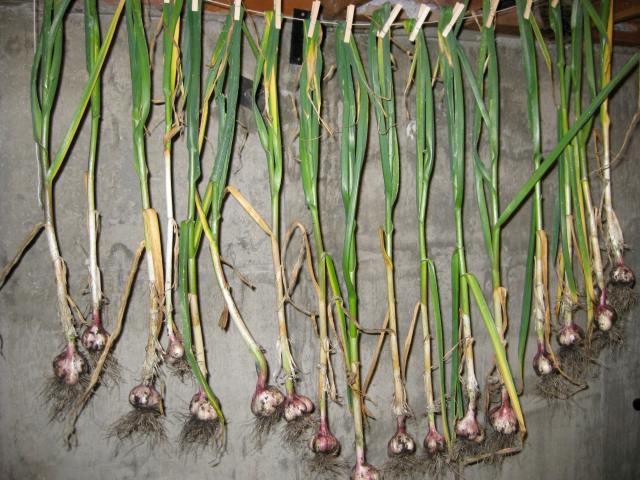
Next you’ll want to cure your garlic in a dark and dry location (if you want to eat a bulb right away, go ahead! Curing it just makes it keep longer). I use my basement and then keep them stored there until I am ready to use them. I have a very expensive and highly technical set up that consists of two screws in the ceiling with a piece of string tied between them and clothespins as the garlic attaching devices. Make sure to keep the drying garlic high in an area that is not accessible to pets because some pets (mainly a white cat called Bear) enjoy eating garlic leaves, breaking out in hives, and getting dragged to the vet. Your garlic will be completely dry in about 4-8 weeks and you can give them a brushing off to get rid of any remaining dirt and remove and discard the dried leaves.

IMG_3591

This year’s garlic was Red Russian, which is a hardneck variety, ordered from West Coast Seeds. I’ve grown a few different types before but Red Russian seems to give me the biggest and healthiest bulbs, so it is my go-to variety. This reminds me, I need to go order my bulbs for planting this fall!

Chinese Five Color Hot Pepper

I have never successfully grown a pepper from seed until very recently. A few years ago, I bought a jalapeno plant from the local nursery and was able to harvest one pepper from it. Somehow that tiny little bit of pathetic success went to my head. The next year I started a few pepper plants in the house from seed in the late winter and planted them in my raised bed in the spring. And I got nothing. You would think that would deter me from trying again. Last year – same story except I moved them out into my newly built greenhouse, planting them in the greenhouse’s raised bed. And NOTHING HAPPENED. Even the plants themselves didn’t get much taller than 5 inches and I had no flowers at all. I decided to try digging a few plants out in the fall, plopping them in some plastic pots and bringing them in the house to overwinter. Then some time in February, I decided to start a bunch more little peppers under lights. For some strange reason, those little plants lived for months in the house and even survived a renovation – by the time they went outside, they were covered in a layer of who-knows-what renovation dust. I transplanted them all into their own individual 8″ terra cotta pots and stuck them in the greenhouse. And I guess the pepper gods were shining down on me because I have a million peppers, including a ton of Chinese Five Color hot peppers.

IMG_3521

I purchased these seeds from Urban Harvest a few years ago. They are a rare hot pepper variety, although I have seen them popping up a bit more online in the last two years. Although they look very similar to the ornamental pepper plants that you see occasionally in the houseplant section at the grocery store and Home Depot, these are actually very different taste-wise. It is a very beautiful plant – medium sized, green foliage with purple veins and loaded with stunning rainbow colored peppers. The name is a bit obvious but in various stages of development, this pepper will be purple, yellow, pink, orange and red. The purple stage is the longest – it starts out as purple and matures to bright red. The peppers themselves are fairly small, about an inch long and 1/2 inch diameter but make up for their size in taste.

IMG_3541

I always make a point to read the reviews of hot peppers before I try growing them and I’d read mixed reviews of this one. Some people described it as weak and bland, while others said it is flavorful and very hot. I guess, like anything, it depends on your climate and growing conditions – and I’m sure it might even vary in taste from season to season. Like I mentioned, mine were grown in terra cotta pots in a hot greenhouse. My experience was good – I should mention that I am somewhat of a wimp when it comes to spicy food. I’m not a total baby and it is mostly due to a weak stomach, but I am nothing like my husband who loves burning his face off with spicy food. But yeah, these little guys pack a bit of punch. On the scoville scale that I viewed, this one is 30,000-50,000 which I interpreted as “sort of hot”, but I was a bit wrong after tasting it and have changed my interpretation to “hot but I’m not dying”. I also popped the whole thing in my mouth, seeds and all, in order to get the whole affect and flavor. It was good though and I would actually recommend pepper lovers to try this one out – it was easy to grow, the first hot pepper to ripen out of all of my peppers, and has a good amount of hot flavor.

I’m really glad that I stuck it out and kept trying to grow hot peppers. I know it’s different for everyone but what worked for me was the terra cotta pots – it allowed the soil in the pots to warm up really quickly and they seem to respond really well to that. Success! Oh and I mentioned above that I had overwintered a few of last year’s pepper plants in the house. And I will report that this made no difference whatsoever to crop timing. I was able to keep these alive throughout the winter and they even survived the move out to the greenhouse, but they ended up flowering and fruiting the same time as the peppers that I’d started indoors in February. And the yields were about the same. The only real difference is that last year’s plants are a little taller than this years. So I probably won’t bother with overwintering again.

I have a handful of other hot pepper varieties that I will feature in the next few weeks – including the Filius Blue hot pepper next week. And I’ve got a really exciting project in the upcoming year that involves a video camera, my partner in crime, and some scotch bonnet and ghost peppers.


Little Green Caterpillars from Outer Space

It might be more appropriate to call them Little Green Assholes. Little green caterpillar assholes that have ravaged my brassica crop, leaving it looking like the ends were sucked into a garburator and pulled out halfway through and then little drops of acid burned holes through the remaining leaves. In other words, they look terrible and I want to kill all the Little Green Assholes.

IMG_2472

Two of the caterpillars feasting on a broccoli leaf. And they blend in quite well!

I did a bit of quick internet research and came to the conclusion that these are cabbage loopers. Little green caterpillars that live on the leaves and munch their way through. At first, I thought the holes were from hail damage – we’d had two minor hail storms that didn’t do much damage to the garden, but did tear holes through some other plants. Then last week I noticed that the brassicas really had a lot of holes and it wasn’t from hail damage. That was when I looked a bit closer and noticed these little green caterpillars all over the leaves. I went through a flood of emotions, first shrieking “ew ew ew!”, then anger, then rationality. I found out what they were and why they were eating my broccoli and cauliflower. And then I read about how I can murder them and their entire family and prevent them from ever stepping foot on my property again. Basically, they love brassicas – so broccoli, cauliflower, collards, kale, kohlrabi, etc. But when they are finished with those, they may go ahead and start feasting on your tomatoes. No god damn way. Yeah sure, take my broccoli, whatever. Think about touching my tomatoes and I’m going postal on you.

IMG_3502

So what did I do? Well, I don’t like using insecticides, but I felt like it was a bit too late to deal with them by planting other things that would attract beneficial insects that may or may not eat the caterpillars. So I filled a bucket full of hot soapy water, threw on a pair of gloves and picked them all off the plants one by one until I’d destroyed the entire population (or at least the population in my yard). When I was sure that they were drown, I drained out the water and squished the little bastards, leaving the mashed pile on the ground as a warning to their friends (not really). Then I burned my gloves and stuck my hands in a bucket of sanitizer (also, not really). I’m pretty sure that my broccoli and cauliflower is done with and I’m probably best off pulling it out and throwing it right into the garbage bin, destroying any eggs that the caterpillars may have left behind.

IMG_3510

At a glance it really does look like it could be hail damage but even the young leaves are ripped to stripped almost clean to the veins.

I read that the best way to prevent cabbage loopers and other brassica loving insects from attacking your crops is to throw cloth row covers on as soon as you plant them (ugly but apparently effective). I’m not convinced that I will invest in row covers as I’ve never actually had any luck with brassicas, besides kale. This year was an experiment, so it’s not like I was looking forward to an amazing crop. But at the same time, it is very disappointing when anything doesn’t work out in the garden. I also mentioned that you can deter these insects and attract other beneficial insects by planting specific things, such as marigolds. The funny thing is that I did have marigolds planted in the same bed, but at the end near the tomatoes to deter aphids, so perhaps more strategic inter-planting would have helped a bit. The good news is that the tomatoes seem to be unharmed. If you’ve had any experience with cabbage loopers please leave your feedback in the comments section – I’d love to hear how you dealt with the little savages!