The time finally came to deal with Sod Mountain. This was the dumping ground for the grass we removed from the back yard last year. A few years ago, right before we built our shed, we decided that we were going to clean up our alley in order to move our fence back about 6 feet and extend our yard a bit. Maybe a previous owner parked an RV in the back alley – that is really the only explanation I can find for why they required such a long parking spot back there. So why not move the fence back an extra few feet and extend the yard space. We had an old decrepit fence and a flimsy Rubbermaid shed that came with the house – the fence was removed and hauled to the city landfill and the shed was sold on Kijiji. We leveled out the back alley, moved the two compost bins, built a shed and then build a new fence. Amazing how adding an extra 6 feet of length to the yard can make it seem so much bigger! We still park our car in the alley and there is tons of room, so even when we decide to leave our home, someone with a longer truck or SUV can comfortably park in the spot without having to bulldoze the fence and shed.
 Sod Mountain on July 1, 2014 – looking pretty terrible. There is a third composter and a raised raspberry bed back there!
Since the initial cleanup a few years ago, we have added a narrow raised bed and another compost bin (the bin was free from the city!), bringing the composter total to 3. I had planted raspberry bushes in the raised bed, but you know the saying out of sight, out of mind? Yeah. Good intentions. I’d also filled the bed with well-rotted manure from my parent’s farm which is black gold, but the downside is that it is full of weed seeds. So it is mainly just a weed garden. I cleaned this up a bit now and have intentions of throwing down some mulch to keep the weeds in check. Maybe I’ll remember to water it – although the raspberries seem to be doing really well on absolutely nothing but neglect.
So what does one do with a surplus of removed sod? It seemed way too good to just take it to the landfill – plus it would have taken us an entire weekend to haul it away in a hatchback and we’re too cheap to rent a truck. I’m sure someone with a truck on Kijiji would have taken it away for a fee but I tried to approach the old sod as something I could use instead of something I had to get rid of. I decided that a good idea would be to build a giant raised bed, where we could throw the sod in and allow it to slowly decompose and eventually be used as garden soil when needed. Because we do still park back in the alley, we decided to put the three compost bins on top of the raised bed. I also wanted an area that I could throw more sod onto as we continue to slowly remove the grass in the front yard.
So began the task of making room for the giant raised bed. We measured things out to see what the maximum size the raised bed could be. We decided on 4’x10’. Initially, we were just going to build it about a foot high, but decided to add an extra level of 2”x6”s to give it some more height. This turned out to be a good idea because we ended up needing that extra space right away. Plus, we made sure to build the corner braces in about 4 inches from the top of the bed so that in the event that we do want to add another level and build it higher, it would be really easy to attach everything together. That was my husband’s brilliant idea.
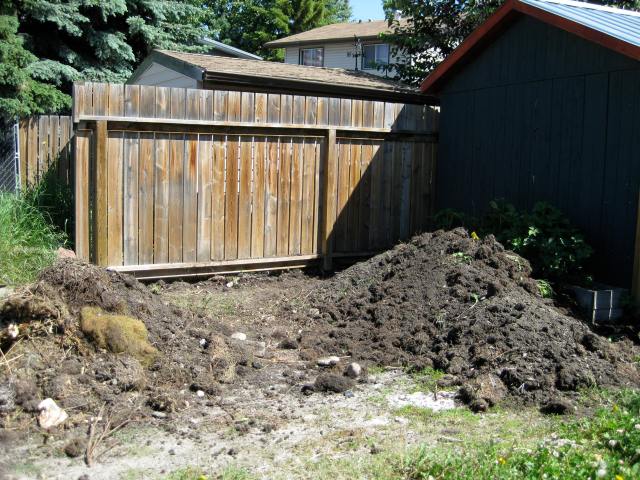 After moving the composters and making room for the new raised bed
The second step was making the space to lay down the raised bed – so we temporarily moved the compost bins out of the way, including their contents (all 3 were completely full and with a lot of materials that hadn’t yet decomposed because we’ve been awful about maintaining our bins) and started shoveling some of the sod out of the way. It sounds really easy, but actually it was kind of back breaking. I really wish that I had thought of this idea like a year or so ago when we first began sod mountain because then we could have just built the bed and thrown the waste right in. Oh well. That’s why I am telling you about this so maybe you’ll learn from my mistakes – I guess not necessarily a mistake, but just not thinking ahead.
Next we constructed the raised bed and built it into place ensuring that it was leveled on the ground. There are a lot of tutorials online for building your own raised bed – we had built our first raised bed using a set of instructions I’d found online but as we built more beds, we found out what worked well for us and went along with that. We used cedar 2”x6” boards, cedar 4”x4” posts as braces and 3” cedar decking screws. I’ve read online that new cedar can actually affect your vegetable growing abilities in the first couple of years due to something that exists in cedar naturally, but I’ve actually never had a problem with this. Or at least, I haven’t noticed anything. Maybe if I had more space I could experiment with different materials and see if there is any difference. But really, in my location, the only lumber options I have are pressure treated, cedar and spruce, so I have gone with the natural rot resistant option that has served me well for the last 5 years since we started building raised beds.
Before we began filling the raised bed, I stapled some landscaping fabric into place just above the top level gap inside the raised bed (this is so that dirt will not escape the gaps) – I didn’t want to put fabric on the ground as I want worms to come up into the bed and work their little wormy magic. When the bed was in place, we started shoveling the contents of Sod Mountain inside. By this time, it had started to get really hot outside and we were pretty tired. But determined. So we finished and somewhat leveled the composters on top. I was actually impressed with how much sod we actually had – and of course it will settle a bit and I’ll have some more room to throw more sod into. After the composters were in place we threw the original contents back into the bins, watered them, and secured the lids. Now hopefully we will remember to maintain these.
 All done! I also stained that one back section of our fence (finally).
It really doesn’t look like much, but it was a huge amount of hard labour and we’re both really pleased with the results. I will be topping the exposed bits with some cardboard and cedar mulch to try and keep weeds and grass from taking over. When I need to add more sod to the pile, I’ll just lift this up and throw in the waste. I will probably eventually start planting things in this bed as well – can you imagine a pumpkin growing in this pile? Finally, we’ll finish up the area with a fresh load of gravel for the parking spot.
 We can finally get to the raspberry bushes!
I’m probably going way over board in my effort to beautify my alley – frankly, the alley is mainly used as a dumping ground for broken crap & dirty old mattresses, but I just think it is such a waste of space if I do nothing with it. Or maybe I’m a pioneer and others in my neighborhood will follow. The point is, if you plan on removing your lawn it is a good idea to plan ahead and decide what you should do with the removed sod. We didn’t really have a plan and we were just going to dispose of it, but I’m happy we didn’t and ended up turning it into something useful.


 Small radish harvest July 2, 2014


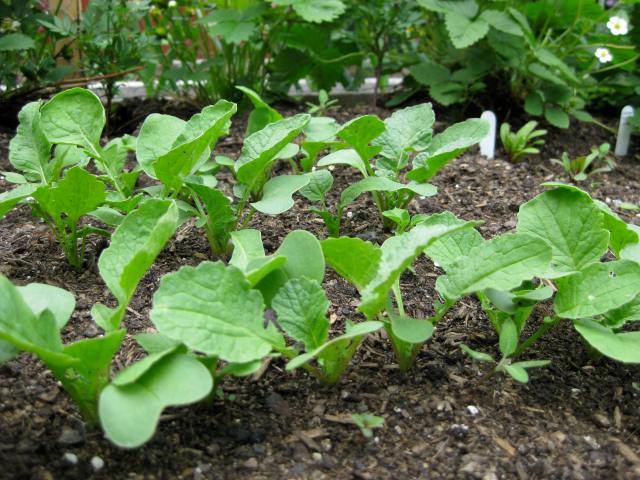 Radishes almost ready to eat on June 29, 2014
 Secret Wool Society