Pickled Crack Vegetables

A couple of years ago, I was at my local farmer’s market and found myself standing in front of a large display of pickled things – there were cucumber pickles, pickled asparagus, canned fruit, jams, and many other things, including a tasty looking jar of pickled mixed vegetables. Not looking at the price, I grabbed the jar of pickled vegetables, along with a few other fresh things, paid, and took everything home. As I normally do on weekends, I made myself a sandwich for lunch and then I cracked opened the jar of pickles and put a few on the side of my plate. As soon as I started in on the pickles I exclaimed “Holy crap, these are really good!” and then promptly ate the rest of the jar of pickles. The next weekend, I went back and bought another jar. But this time was a bit different – I didn’t pick up anything else. I brought the jar to the register and the clerk told me it would be $6! SIX DOLLARS. FOR ONE PINT SIZED JAR OF PICKLED VEGETABLES. But they were so good. And I had too much pride to put the jar back at that point, so I paid and took the pickles home. And ate the whole jar in one sitting. This continued on for a few more weeks until one Saturday I sent my husband out by himself to the market with a list. Of course the list included a jar of pickles. So about an hour later he comes home with the jar of pickles in his hand, looks at me and says “You know these are $6 a jar, right? SIX DOLLARS A JAR?!! That’s like a third of our grocery budget going towards your expensive pickle habit!”. Maybe those weren’t the exact words, but I do remember the shame I felt. It was time for a change but I couldn’t give up the pickles, I was addicted! And that is how they became known around our house as pickled crack vegetables.

So once my shameful secret was out, I needed to find some way of satisfying my addiction, but also not spending a third of our grocery budget on pickles. Now I’m definitely someone who wants to support our local farmers, but six dollars for a jar of pickles is a bit ridiculous. And honestly, isn’t saving money the point of preserving your own food? Also, I can somewhat justify replicating the recipe because I still buy a lot of produce from them throughout the year. My apologies if I have offended anyone – I had to do what I had to do.

Now let’s talk about the crack pickles themselves. It’s a really classic basic recipe that you can simply customize to fit your own tastes. You should have a basic knowledge of canning before you begin, but a beginner could easily make this recipe as well. I always use the same vegetables (carrots, beans & cauliflower) but you could mix it up if you want (onions, peppers, peas, beets, etc). What really makes the recipe is the seasoning – I like to keep it really simple so I use fresh garlic, fresh dill, black peppercorns and dry dill seed. The only other ingredients you’ll need besides this and the vegetables are pickling vinegar and pickling salt.
IMG_2972

Pickled Crack Vegetables Recipe

Ingredients
– Approximately 2 cups of each fresh vegetable – I use cauliflower, green beans, and carrots, just make sure they are the freshest vegetables you can find (I’ve used grocery store vegetables before, no big deal!)
– Fresh garlic cloves, skins removed (amount will depend on how much you like garlic – I usually put in 2-3 cloves per jar)
– Fresh dill – approximately one sprig per jar
– Black peppercorns and dill seed (approximately 1/2 teaspoon each per jar)
– 2 1/2 cups of pickling vinegar
– 2 1/2 cups of tap water
– 1/4 cup pickling salt (I use kosher)

Instructions
1. Sterilize all your jars, lids and utensils (I do this in the dishwasher or you can do it in a pot of boiling water).
2. Prepare your boiling water bath.
3. Prepare your vegetables by washing them, removing the ends and any bruises or deformities, and cutting them into manageable pieces.
4. Bring your vinegar, water and salt to a boil in a non-reactive pot and simmer while you prepare the jars.
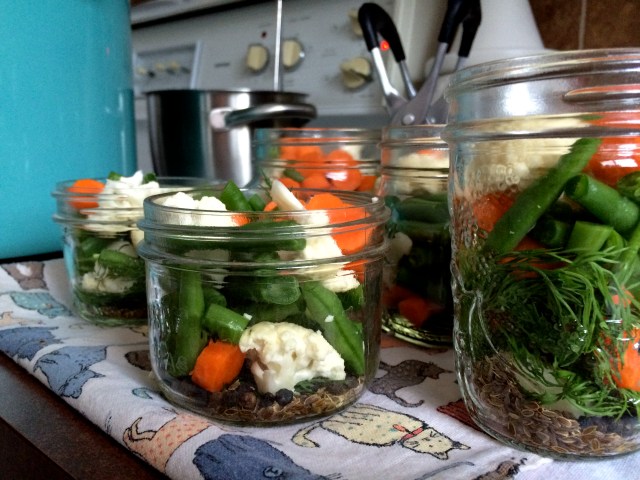
5. Put your herbs and spices in to the sterilized jars and then add your vegetables.
6. Ladle the hot liquid in to the jars leaving approximately 1/2 inch of head space.
7. Wipe the jar rims with a wet paper towel and add lids (do not over-tighten)
8. Carefully lower the jars in to the boiling water bath and process for 10-15 minutes depending on the size of your jars.
9. Carefully remove the jars, being careful not to tip them, and place on a dish towel on a flat surface. After a couple of hours, check to make sure all of your jars have sealed (I love waiting to hear that popping sound!). Do not disturb the sealed jars for 24 hours. If any jars did not seal, put them in the fridge and eat within a couple of weeks.
10. Enjoy your crack pickles! You should eat them within a year but they probably won’t last that long since they are so good!

IMG_2984

My favorite thing about this recipe is that it is so classic and easy. As much as I love experimenting with different hot peppers and spices in my canning, I really love that classic pickled taste.

Tale Of A Pumpkin: From Seed To Pie

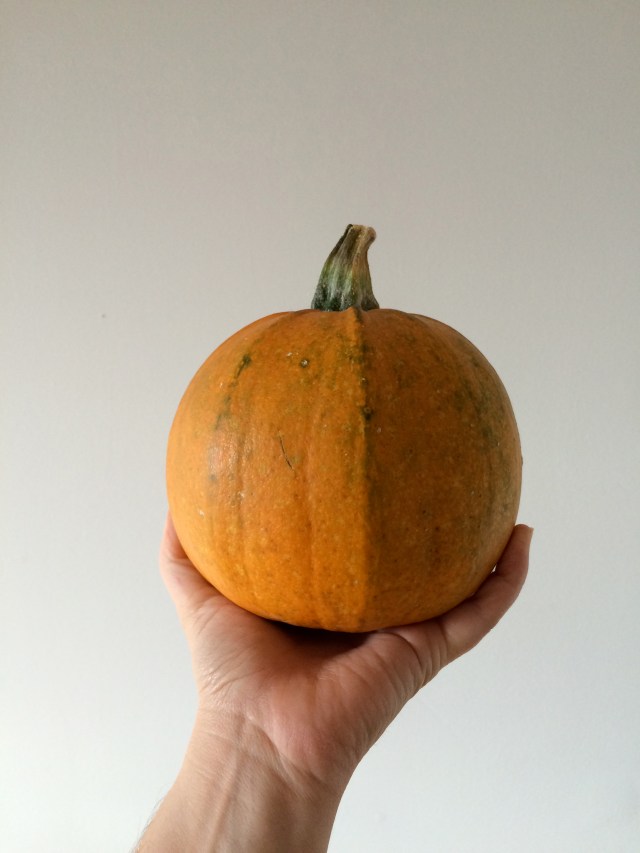
I don’t remember exactly what possessed me to grow a pumpkin plant this year – I think it may have been guilt for having a package of seeds and not growing them for a few years. Pumpkins take up quite a bit of precious garden real estate, so it would be understandable that I would skip a few years. I’d actually only grown pumpkins twice prior to this year – once was in my first garden where the vines took up about half of the garden but didn’t produce any actual pumpkins, and the other time was about 4 years ago when I grew one plant up a trellis in the back of my garden, that did end up producing 3 small pumpkins which were made in to soup. I’d actually planned on making this year’s two pumpkins in to pie for Canadian Thanksgiving over a month ago, but that didn’t pan out so they’ve just been sitting on my counter collecting dust and cat hair. So with American Thanksgiving this week, I decided to go ahead and try making some pies (really, I’m just using that as an excuse to eat pie).

IMG_3506

I started the pumpkin seeds in my house early May, a few weeks before they were transplanted outdoors in one of the raised beds. The plant was along side my chicken wire cat/squirrel barrier fence which acted as a trellis for the plant, so it didn’t end up taking up a lot of room in the garden. It didn’t actually produce any pumpkins until either late July or early August and I didn’t think they would grow big enough to be harvested before freezing temperatures hit. But luckily I was wrong and two green pumpkins were harvested in early September, right before the big freak snowstorm. From there, they turned orange over the next few weeks in the kitchen and lived on the counter until now when they were cut up, roasted, pureed and baked into delicious miniature pies. It seems like a very long and complicated process for pumpkin pie – and it is. I could have easily bought a can of pumpkin from the grocery store and called it a day. But there was something really special to me about planting a little seed, caring for the plant for several months, harvesting the pumpkins myself, and baking them in to a pie. Don’t get me wrong, I will still use canned pumpkin when I do not have access to home grown pumpkins, or when I am feeling lazy – there is actually nothing wrong with canned pumpkin, it is a wonderful thing! But my pumpkin pie from scratch was absolutely amazing – I have never tasted a pumpkin pie that was this delicious. The time you take making this pie is totally worth it, trust me.

IMG_2399

Step One: Roast The Pumpkin

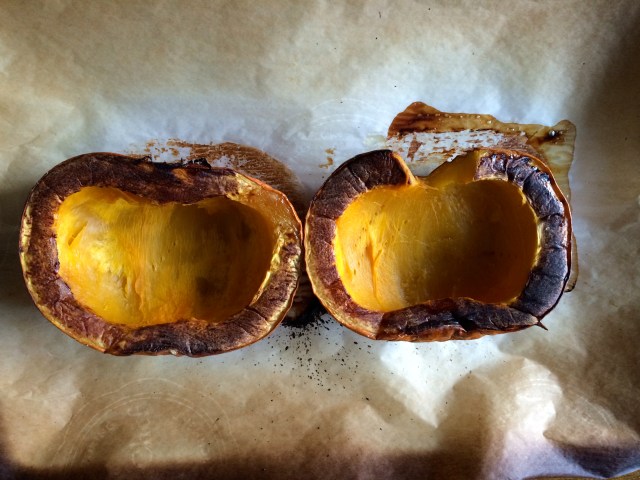
Preheat the oven to 375 degrees. You’ll need one whole sugar pumpkin (sugar pumpkins are specifically pie pumpkins). Wash and dry the outside of your pumpkin and cut it in half (be very careful when cutting it and be very wary of hand and knife placement – luckily I did not injure myself this time but I do have an old pumpkin harvesting injury that has prevented my thumb from ever moving in the same way again). Scoop out the seeds and guts (save the seeds for roasting!). I cut the stem off my pumpkin because I was afraid it might start on fire in the oven. I doubt this would actually happen, I have a bit of paranoia. Place your pumpkin pieces cut side down on a baking sheet and roast them in the oven for about 45 minutes or until a fork easily slides through the flesh. Remove from oven and cool to room temperature.

Next you’ll want to separate the flesh from the skins and discard the skins. My edges were a bit overcooked but they slid away very easily with my fingers from the rest of the flesh and had the same fate as the pumpkin skins. Puree the flesh in a blender or food processor. Think baby food consistency. You can go ahead and make the rest of your pie now or you can just put the puree in a jar and refrigerate it until you’re ready to use it. You’ll only need 1 3/4 cups of puree for the pie and the rest can be used for something else, used to make more pies, or frozen for later use.

IMG_2674

Step Two: Make The Crust

Ingredients:
– 1/2 cup unsalted butter, room temperature
– 2/3 cup confectioner’s sugar
– 1 egg yolk
– 1 cup all-purpose flour (put some additional aside for dusting your counter)
– 1/2 tsp salt

Instructions:
– Beat the butter and sugar together with an electric mixer until smooth.
– Add yolk and mix until combined.
– Add salt and gradually add flour until just combined – careful that the mixture is not too dry (if you squeeze some of the dough together in your fist it should not crumble apart).
– Form dough into a disk and refrigerate for an hour or overnight (the dough will be good for up to 3 days).

Just when you’re about to make the filling, remove the dough from the fridge and shape in to your crusts. I used eight 4 inch tart pans (with removable sides) because I prefer baked goods in individual serving sizes because it is easier to control portions and everyone can have their own adorable little pie. The pies will easily come out of your tart pans if they have the removable sides that you push up gently from the bottom. You can use a large pie plate but my guess is that you would have to adjust the baking times a bit longer.

Dust your surface and rolling pin before you roll out the dough. If you don’t have patience for this, you can divide the dough up into smaller discs and mash them in to the tart pans, which is exactly what I did. The wonderful thing about using these tart pans is even though you think your pies will come out looking terrible, they come out the opposite because the tart pans shape the dough beautifully and you don’t have to worry about making a nice decorative edging like you would on one big pie. One of the reasons that I don’t do a lot of pastry baking is that most of my end results come out looking like they were done by a child with sausage fingers. These tart pans are heaven sent for people like me. When your crusts are finished, just set them aside until your filling is ready.

IMG_2680

Step Three: Make The Pie Filling

Ingredients:
– 1 3/4 cups pumpkin puree
– 1 1/4 tsp cinnamon
– 1/4 tsp ground cardamom
– 1/4 tsp nutmeg
– 1/4 tsp ground cloves
– 1/4 tsp salt
– 1/2 cup granulated sugar
– 1/4 cup maple syrup (I realized as I was making the recipe that my regular syrup had expired over a year ago and tasted very much like molasses. But luckily I had a little bottle of the Noble vanilla & chamomile infused syrup which I used instead)
– 1 1/4 tsp vanilla extract
– 2 large eggs
– 1 cup heavy cream

Instructions:
– Combine the sugar, spices and salt in a bowl.
– In a separate bowl, combine the pumpkin, maple syrup and vanilla extract.
– Lightly beat the eggs, stir them in to the pumpkin mixture, then add the spice mixture (I used my stand mixer on “stir” function). Stir in the cream.

Step Four: Bake The Pie

– Preheat oven to 400 degrees.
– Grab your pie crusts – if you used individual pans like I did, put them on a baking sheet, it will be much easier to maneuver them in and out of the oven.
– Use a small ladle or a measuring cup to pour the filling in to the crusts – fill level to the top of the crust, not over top.
– Bake the pies at 400 degrees for 10 minutes, then turn the oven down to 350 degrees and bake for about 25-30 more minutes or until filling is set in the middle (you’ll know if you tap the side of the tart pan and the middle does not jiggle and the top is slightly darkened).
– Remove from oven and cool to room temperature.

IMG_2681

Step Five: Eat The Pie

This is the part where you whip some of that left over heavy cream to plop on top of your pie (I love just plain cream whipped, no sugar added – it cuts some of the sweetness of the pie). Eat the pie and declare it the best pumpkin pie you’ve ever tasted.

IMG_2682

This is my own recipe with inspiration from lots of other recipes I found online – please feel free to use the recipe on your own blog but please link back to my blog and give credit where credit is due.

Roasted Beet Chips

A few years ago my brother took me for lunch to a little sandwich shop and said “You have to try the beet chips. Trust me”. Of course I agreed because I love beets. And the beet chips were amazing. So after that I had to come home and make them for myself because that’s just what I do. They are really simple to make and an excellent side dish to basically everything. Or you could just make a batch and eat them on their own – I don’t judge.

IMG_3360

Preheat your oven to about 350 degrees. You’ll have to wash your beets, cut off and discard the tops. Slice the trimmed beets fairly thin – using a food processor or mandolin slicer is your best bet because all your beets will be cut in less than a minute.

IMG_3364

Toss the beets in olive oil, some balsamic vinegar, fresh rosemary, salt and pepper. Stick them in the oven for 25 minutes, turn them and put them back in for another 15-25 minutes (depending on your oven – mine is an older electric oven that runs a little high so it took less time for me).

IMG_3368

Done! Some of my edges may have been a little crispy/slightly burnt, but I swear it was intentional (my partner likes them this way!). If you want to add a little something more, you can make a smokey/tangy dipping sauce using mayo, a splash of lemon juice and some paprika. Enjoy!

The Last of the Tomatoes

You might remember that we had an unexpected snow storm in early September which forced me to harvest all of my unripe tomatoes far earlier than I’d wanted. So we’ve been eating away at them for a few weeks as they ripened and I ended up giving away quite a few, but we still had lots left over. They’d all ripened indoors and were sitting in cardboard boxes in the corner of my dining room up until a couple of hours ago. Some were even starting to resemble prunes, so I decided I needed to do something with them now or run the risk of losing them. I’ve heard of people freezing cherry tomatoes whole, but I’ve never actually tried it. My go-to method is roasting them first. And it is so easy!

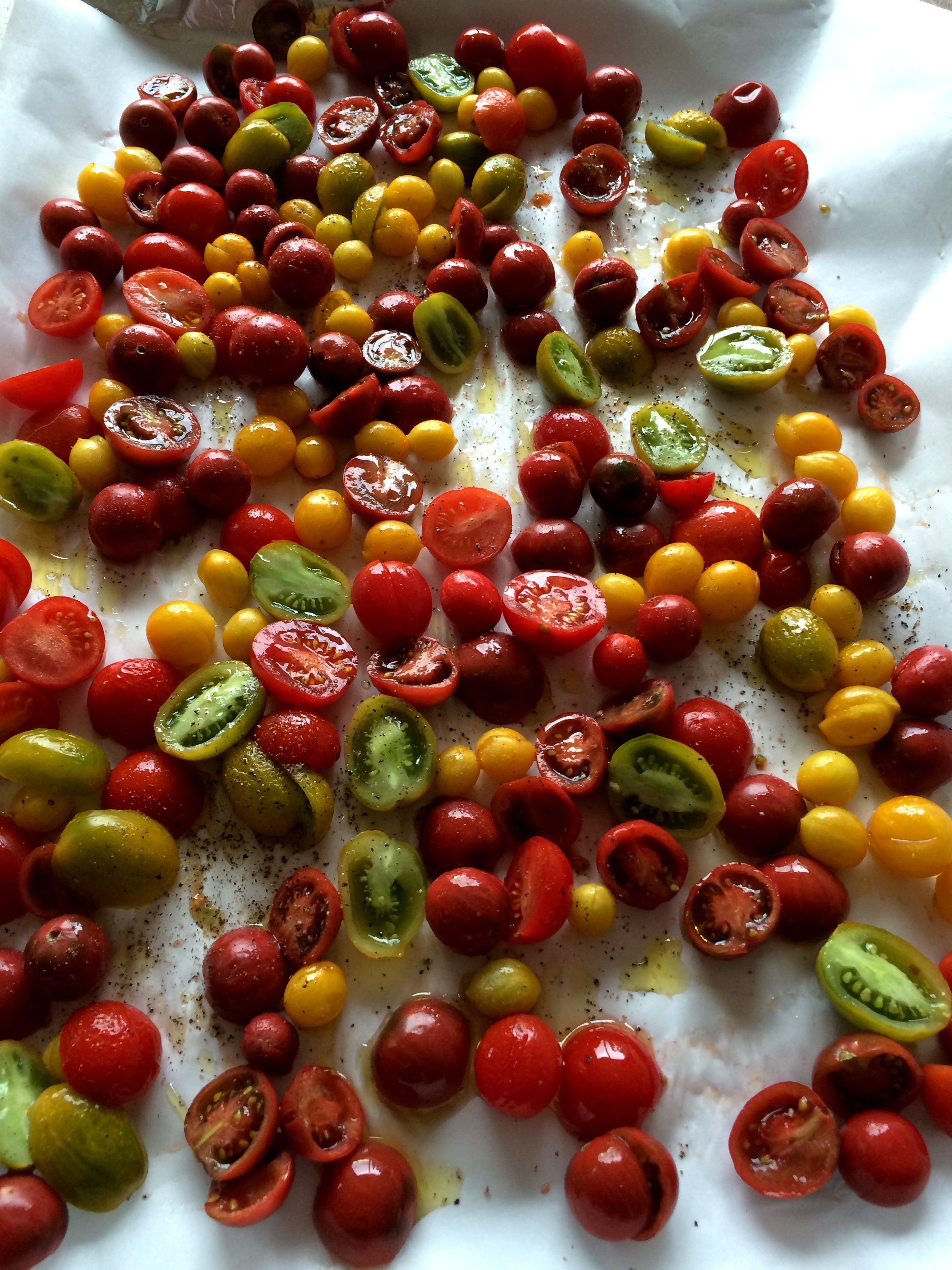
First, start by washing and drying the tomatoes and cutting them up – I had tomatoes of all sizes: the tiny ones were just stabbed with a knife, the regular cherry tomatoes were cut in half, and the smallish/medium sized tomatoes were quartered. Toss the cut up tomatoes with some olive oil, salt and pepper (you may choose to add some herbs as well, such as basil or oregano – or get really crazy and add some hot chili flakes), then lay them in a single layer on a baking sheet – I covered mine in foil and then parchment paper because I am too lazy to do dishes (let’s call a spade a spade here).

IMG_2552

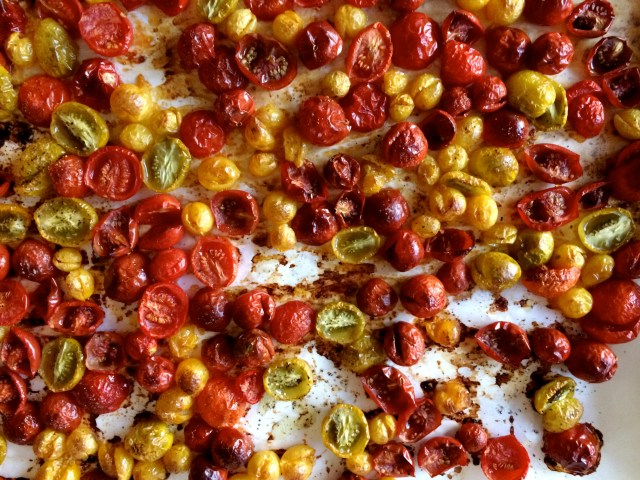
Next you’ll roast them in the oven at about 350 degrees for 45 minutes or so (until they look roasted enough to you – very scientific).

IMG_2557

After they’re roasted to perfection, let them cool to room temperature and put them in to smaller freezer bags. In the winter, I add them to homemade pizza and add into soups in place of canned tomatoes (like beef barley and minestrone). Roasting them really brings out the flavor and preserves that little bit of summer to enjoy throughout the dark and cold months.

Drying Hot Peppers

I guess I didn’t realize how prolific my Chinese 5 Color hot pepper really was until a few weeks ago when I harvested all of the remaining partially ripened peppers. There were a lot of hot peppers. I tried to eat as many as I could fresh, but I could only tolerate eating a small portion of them in fresh salsa without the peppers taking over the entire flavor and burning my face off. I like burning my face off a bit, but I love the taste of home grown tomatoes more, so it was taking a long time to use up the extra hot peppers. Then last week I noticed that some of them were starting to wrinkle, so drastic measures were in order. I considered freezing them whole but then decided to try drying them to make my own hot pepper flakes for adding into chili during the cold months.

Drying peppers is unbelievably easy. I don’t have access to a dehydrator so I wasn’t sure how well drying them in the oven would work, but I was pleasantly surprised when my peppers came out dried and a nice deep red color after a few hours.

Here’s how I did it:

1.Preheat the oven to 200 degrees Fahrenheit (adjust for your oven – I have an older electric oven that runs a little high so I put mine at about 175)

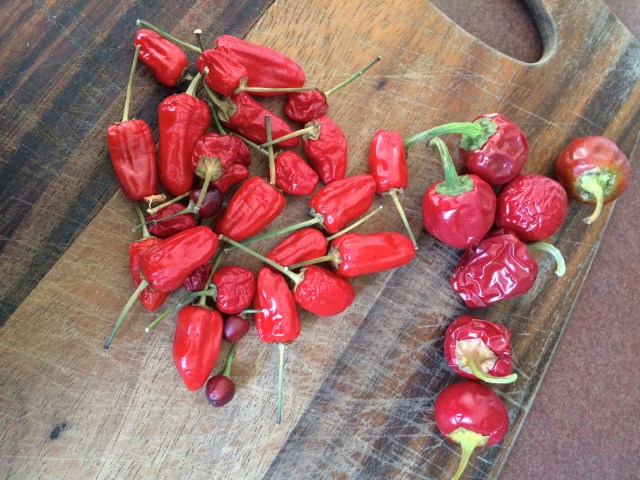
2. Wash and dry the peppers thoroughly. It’s okay if they are wrinkly!

IMG_2354

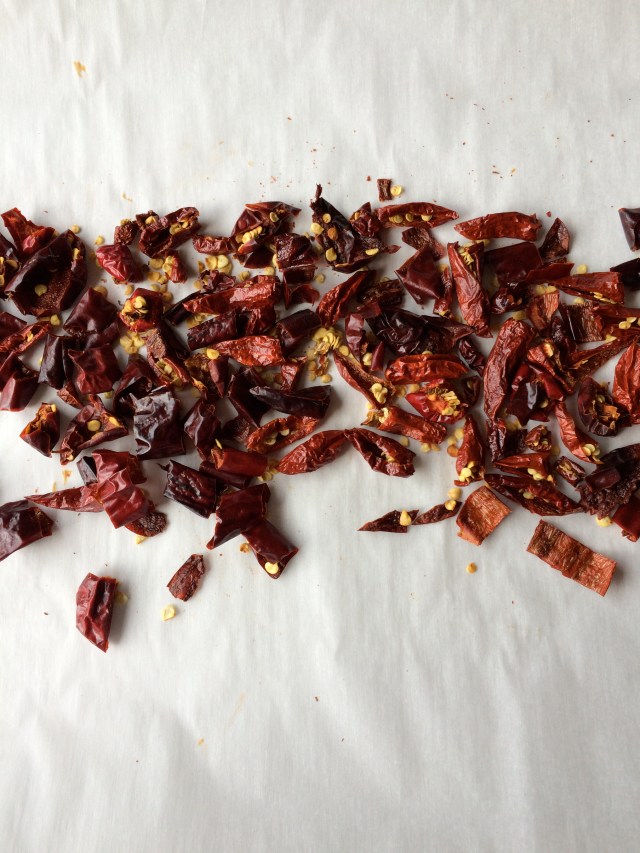
3. Remove and discard any stems and cut the peppers in to smaller pieces. My peppers were fairly small to begin with so I cut them in half but I did have a wrinkly Joe E. Parker that I threw in but cut into pieces about the same size as the small halved peppers. I included all of my pepper seeds but you can remove and discard these if you want a milder end result.

4. Spread in a single layer on a baking sheet (I used a parchment covered sheet)

IMG_2355

5. Dry in the oven for around 2 or so hours, checking every 30-45 minutes and adjusting the time as needed. They need to be completely dry to store properly. Mine took around 2 1/2 hours.

IMG_2363

6. Remove from oven and let sit for an hour or so until completely cool and dry. I let mine sit overnight because I was being lazy.

IMG_2373

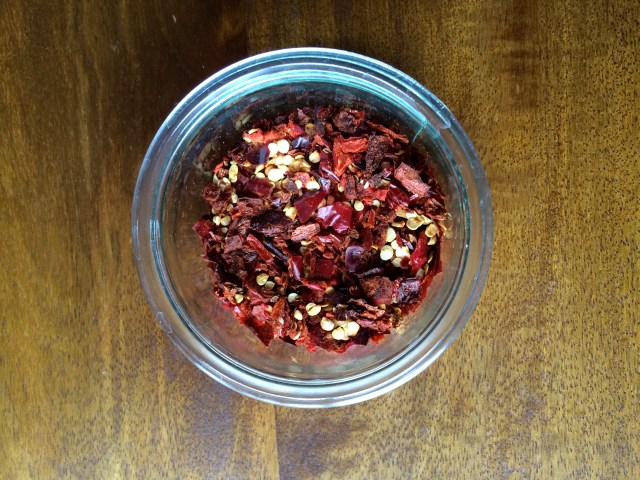
7. Crush using a mortar and pestle if you have one, otherwise you could try a spice grinder or just crush them using a spoon – whatever works.

8. Store in an airtight container.

IMG_2374

So easy and so delicious. Also the drying peppers will make your house smell so amazing for those few hours. Do you have other methods of preserving your hot peppers?